

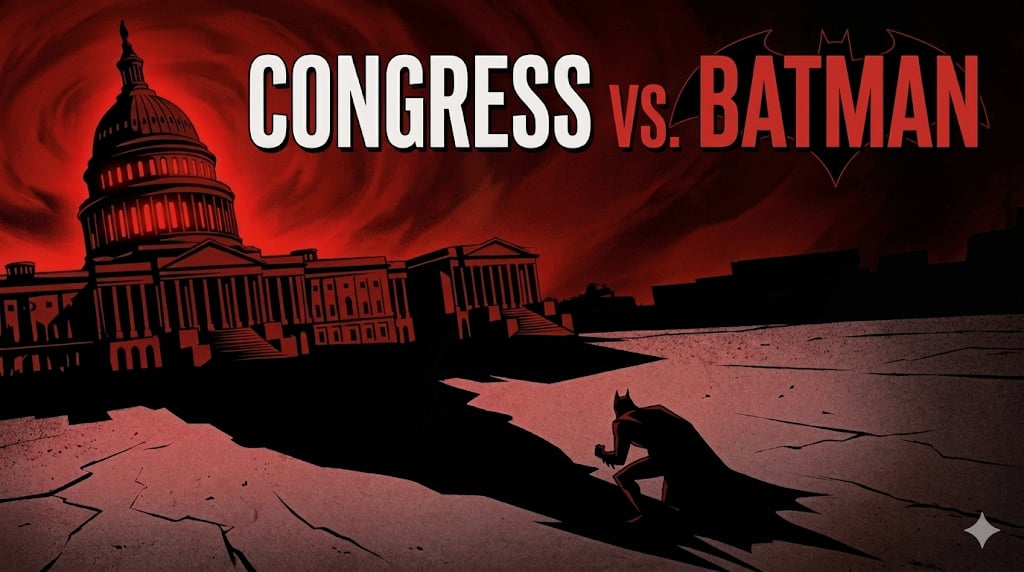

WASHINGTON — In a move that legal scholars are calling the most significant federal challenge to the First Amendment in a generation, Congress is moving forward with legislation that could fundamentally alter the American landscape of information. H.R. 7661, titled the “Stop the Sexualization of Children Act,” has transcended local school board squabbles to become a federal mandate that critics say threatens free speech itself by weaponizing the very funding that keeps American schools afloat.
The bill, which was reported out of committee on March 17, 2026, does not simply suggest content guidelines; it issues a financial ultimatum. By amending the Elementary and Secondary Education Act of 1965, Washington is attempting to tie billions of dollars in federal aid—including Title I funds for impoverished districts—to a rigid, government-sanctioned index of “acceptable” thoughts.
Weaponizing the Federal Purse
For decades, the power to curate school libraries has rested with local educators and parents. H.R. 7661 seeks to centralize that power in Washington. Under the bill’s provisions, any school district that “promotes” or “provides” material containing “sexually oriented material” faces the immediate loss of all federal financial assistance.
However, the “vague definitions” within the bill are what have constitutional advocates sounding the alarm. The legislation defines “sexually oriented” to include any material involving “gender dysphoria or transgenderism,” regardless of whether the content is clinical, biographical, or fictional. By targeting identity rather than just explicit conduct, the bill creates a “viewpoint discrimination” trap that legal experts say is a blatant violation of the First Amendment.
“This is the weaponization of federal funding at its most dangerous,” says a spokesperson for the American Library Association. “It isn’t a suggestion; it’s a financial death sentence for schools that refuse to participate in a federal book ban.”
The Dark Knight in the Crosshairs: Congress vs. Batman
The most visible casualty of this legislative overreach may be the icons of American pop culture. In a scenario that sounds like a plot from a comic book, Congress vs. Batman has become a rallying cry for those defending the freedom of information.
Because the bill relies on visual interpretation and “ideological” content, the modern mythos of Batman and his diverse “Bat-Family” are under direct threat. Popular characters like Harley Quinn—whose storylines in recent years have explored LGBTQ+ identity and complex psychological recovery—would likely be among the first removed from shelves.
By targeting specific categories of identity, the bill doesn’t just protect children—it erases people. When a government declares that the mere existence of a certain group of people in a book is “sexually oriented,” it is no longer about safety; it is about restricting freedom of thought.
“This bill is a blueprint for how a centralized government can dismantle the First Amendment without ever technically repealing it,” warns a constitutional attorney. “If you can control the funding, you can control the speech. Today it’s Batman and transgenderism; tomorrow it could be any political ideology that the current administration finds distasteful.”
The Point of No Return
As H.R. 7661 moves toward a full vote in Washington, the stakes have never been higher. This is not a debate about “appropriateness”—it is a debate about the weaponization of federal funding to enforce a national silence.
Under the “compliance by fear” model, a school librarian in a district relying on federal grants for school lunches or special education will not risk an audit over a Batman trade paperback. The mere presence of a queer character or a “suggestive” costume could be interpreted by a federal auditor as a violation, leading to a preemptive purge of graphic novels nationwide. This restricts freedom by removing the mirrors in which many students see their own burgeoning identities reflected.
The Death of the “New” Classic
While the bill’s sponsors claim to protect classics, the fine print reveals a “chilling effect” on the evolution of American literature. The bill allows for “classic works of literature,” but these are defined by narrow, static lists often provided by ideological third-party organizations.
This means that while The Great Gatsby or Of Mice and Men might survive—provided they don’t offend a specific auditor’s interpretation of “adult themes”—no new work of fiction can ever achieve “protected” status. A Pulitzer Prize-winning novel published in 2027 would have no legal protection under this framework. This effectively freezes the American mind in a government-approved past, halting the freedom of information and the natural development of new ideas.
A Direct Threat to Free Speech Itself
The Supreme Court has historically held that students do not “shed their constitutional rights to freedom of speech or expression at the schoolhouse gate.” However, H.R. 7661 operates on the assumption that the federal government has the right to “starve” out speech it finds politically inconvenient.
The right of an American citizen to digest ideas, to explore characters like Batman, and to read the classics of both the past and the future is a cornerstone of a free society. If Congress succeeds in tying the hands of educators with financial threats, the freedom of information in America may become a relic of the past, as “vague definitions” become the new law of the land.
In the battle of Washington vs. the right to read, the ultimate loser isn’t just a comic book hero or a novelist—it is the fundamental American right to think for oneself.
