


Trelew, Argentina – A newly identified species of long-necked dinosaur is offering fresh insight into prehistoric life after paleontologists uncovered fossil remains in southern Argentina.
According to researchers from the Bavarian State Collections of Natural History, the dinosaur—named Bicharracosaurus dionidei—measured roughly 20 meters (65 feet) in length and lived about 155 million years ago during the Late Jurassic period. The fossil was discovered in the Chubut Province of Patagonia, a region known for its rich deposits of ancient life.

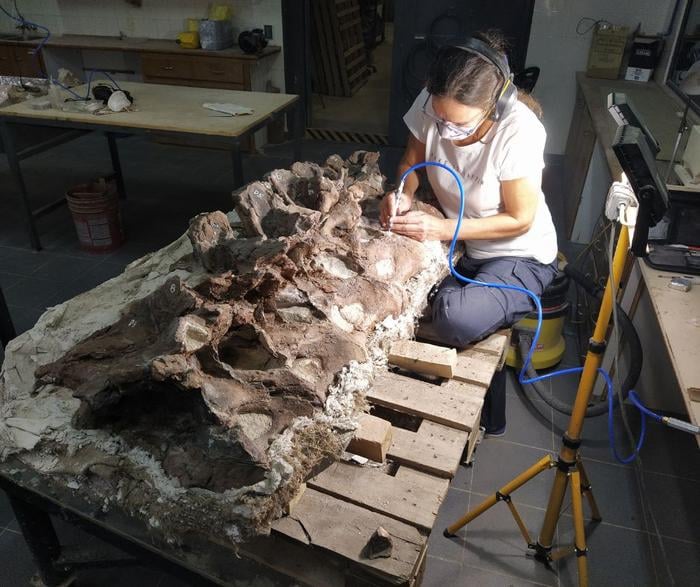
The partial skeleton includes more than 30 vertebrae from the neck, back, and tail, along with ribs and part of the pelvis. Scientists say the bone structure indicates the remains belonged to an adult animal. What makes the discovery notable is the dinosaur’s blend of characteristics typically seen in two major sauropod groups: brachiosaurids and diplodocids.
According to the study published Thursday in the journal PeerJ, some features resemble Giraffatitan, a brachiosaurid from Africa, while others closely match Diplodocus, commonly found in North America. This unusual combination could help scientists better understand how these massive dinosaurs evolved.
Researchers say the find is especially important because most Late Jurassic sauropod fossils have been discovered in the Northern Hemisphere. The Patagonian site provides rare comparative material from the ancient southern supercontinent Gondwana.
The species is named in honor of Dionide Mesa, the shepherd who first discovered the remains on his land. The fossils are now housed at the Museo Paleontológico Egidio Feruglio in Trelew.
