

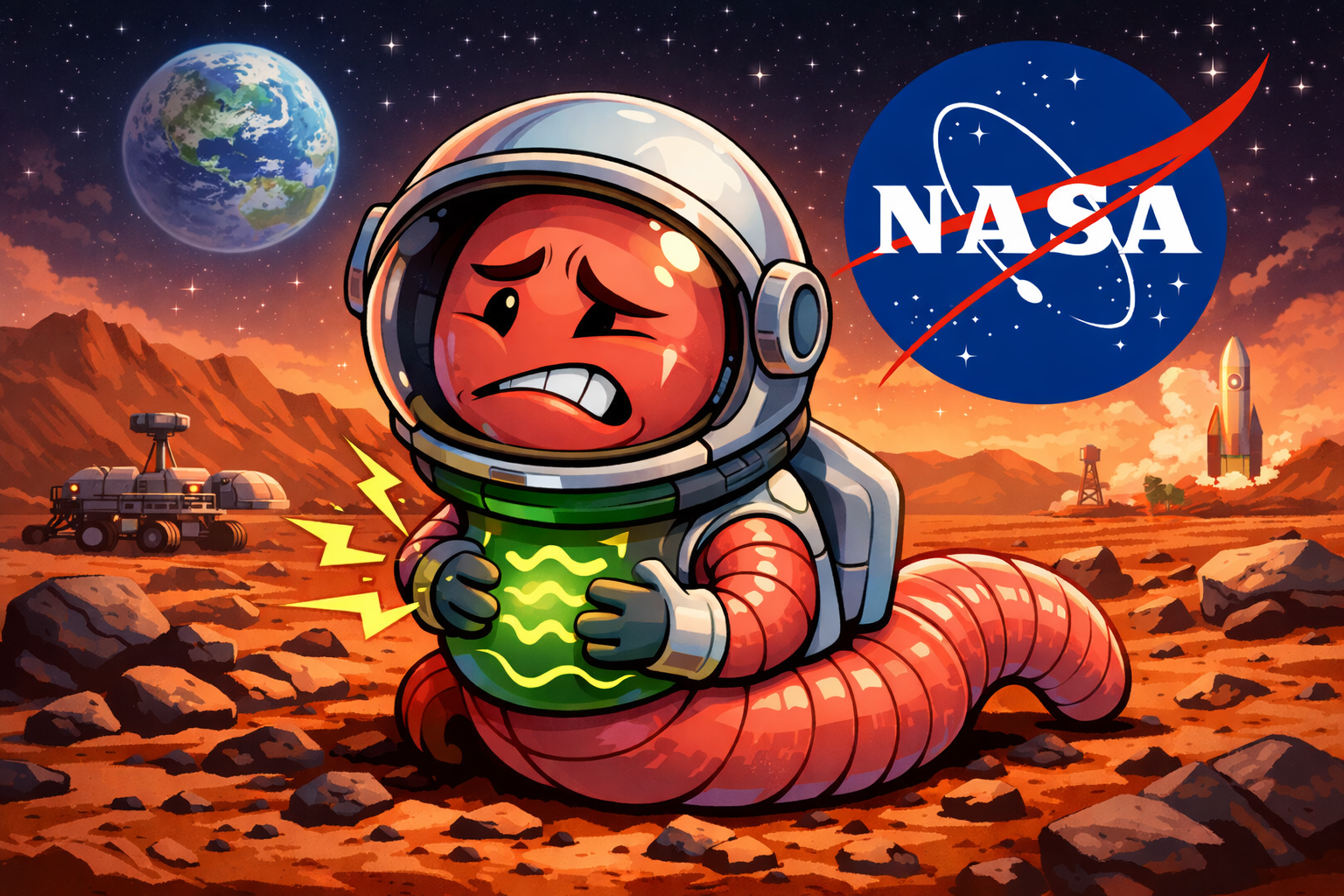

Houston, TX – A small but critical experiment aboard the International Space Station could play a major role in whether humans can safely travel to Mars, as scientists urgently study how worms behave in space.
According to NASA, Expedition 74 astronauts are analyzing roundworms in microgravity to understand how spaceflight impacts the human body—particularly gut health, which is essential for long-duration missions. Researchers say these tiny organisms mimic key biological systems found in humans, making them a powerful tool for space medicine.
European Space Agency astronaut Sophie Adenot led observations of the worms, recording how their bodies and internal microbes change in orbit. The findings could lead to the development of probiotics, or “living medicines,” designed to protect astronauts from illness during extended missions far from Earth.
At the same time, NASA astronaut Chris Williams conducted plant experiments focused on growing food in space, another major challenge for Mars missions. Scientists say combining sustainable crops with advanced medical protections will be essential for deep space survival.
The urgency of this research comes as global space agencies accelerate plans to send humans to Mars in the coming decades. Even minor health issues in space can become serious without access to Earth-based care.
Crew members also continued unloading cargo and preparing for station-wide computer upgrades, but the focus remains on science that could determine the future of human exploration.
