

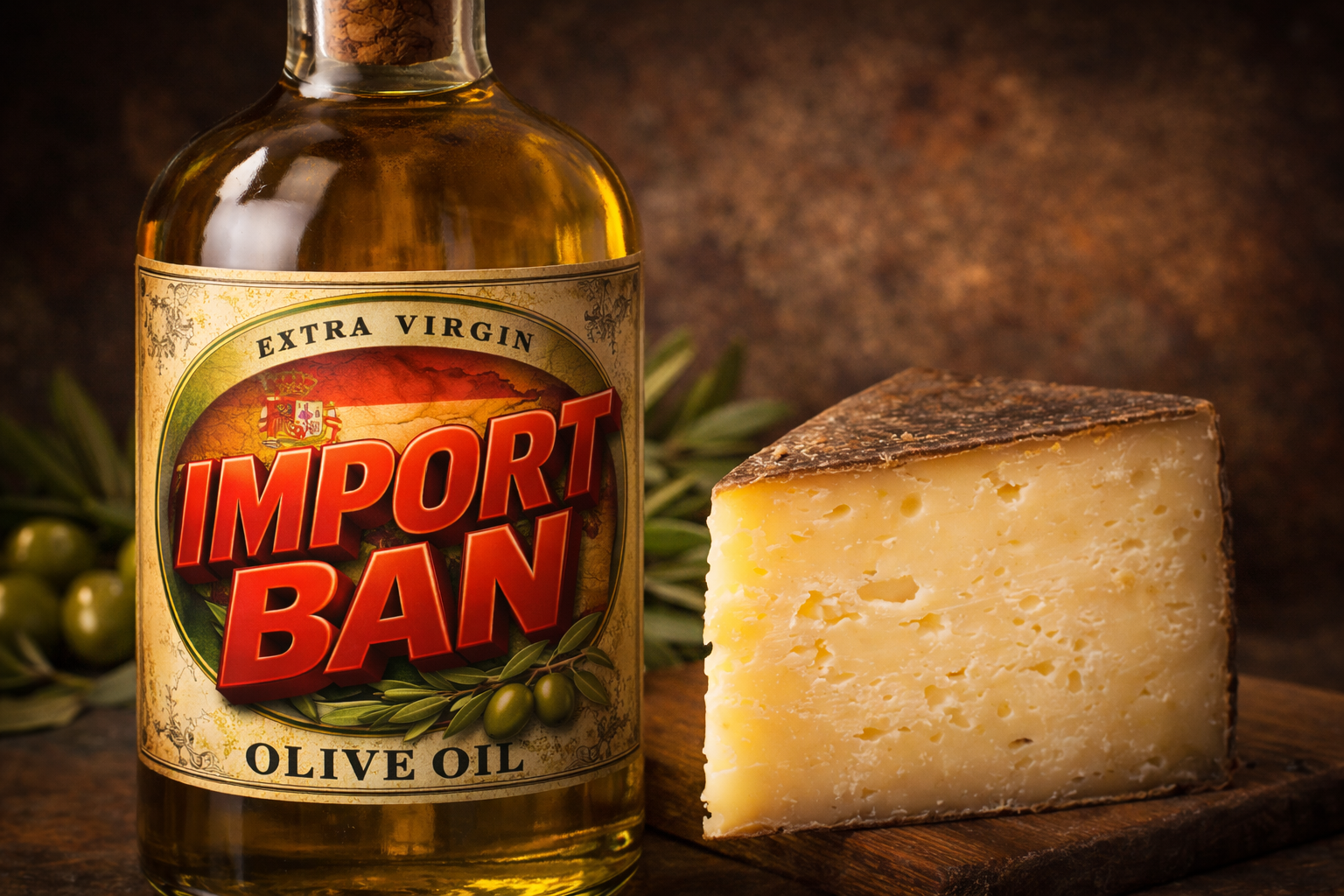
Families across Florida–Georgia may want to take a closer look at their grocery bills.
On Tuesday morning, the United States announced it is suspending imports from Spain due to the country’s role in the escalating Iran conflict. While the decision centers on international tensions, the impact could quickly reach homes in Miami, Orlando, Tampa, Atlanta, Savannah, and communities across the Southeast.
Spain exports a wide range of food products to the United States. When those imports are suspended, supply tightens. When supply tightens, prices often rise — especially on specialty cooking items.
The biggest product to watch in your home is olive oil.
Spain is the largest olive oil producer in the world. Many olive oils sold in Florida and Georgia depend on Spanish supply, even if labels list multiple countries. If shipments slow or stop, grocery stores and warehouse retailers could raise prices quickly as wholesale costs increase.
Other common kitchen staples could also see price hikes. Spanish olives used in salads and pasta, anchovies for dressings and seafood dishes, smoked paprika for seasoning, and manchego cheese are all imported products that may become more expensive.
Restaurants across Florida–Georgia may also adjust menu prices. Italian restaurants, seafood establishments along the coast, and tapas-style spots rely heavily on olive oil and imported ingredients. Higher supply costs could be passed along to customers.
This is not a food shortage. Grocery shelves will still have alternatives. But when imports are cut off, prices often rise before new suppliers are secured.
Households in Florida–Georgia that regularly use these items may want to review pantry supplies before prices climb further.
Full List: Grocery Items That Could Increase in Price
- Extra virgin olive oil
- Bulk olive oil (Costco, Sam’s Club, BJ’s sizes)
- Spanish olives
- Anchovies
- Sardines packed in olive oil
- Manchego cheese
- Serrano ham
- Spanish chorizo
- Smoked paprika
- Saffron
- Paella rice
- Sherry vinegar
- Rioja wine
- Cava
Florida–Georgia families who rely on these products may feel the impact first in their home kitchens.


