

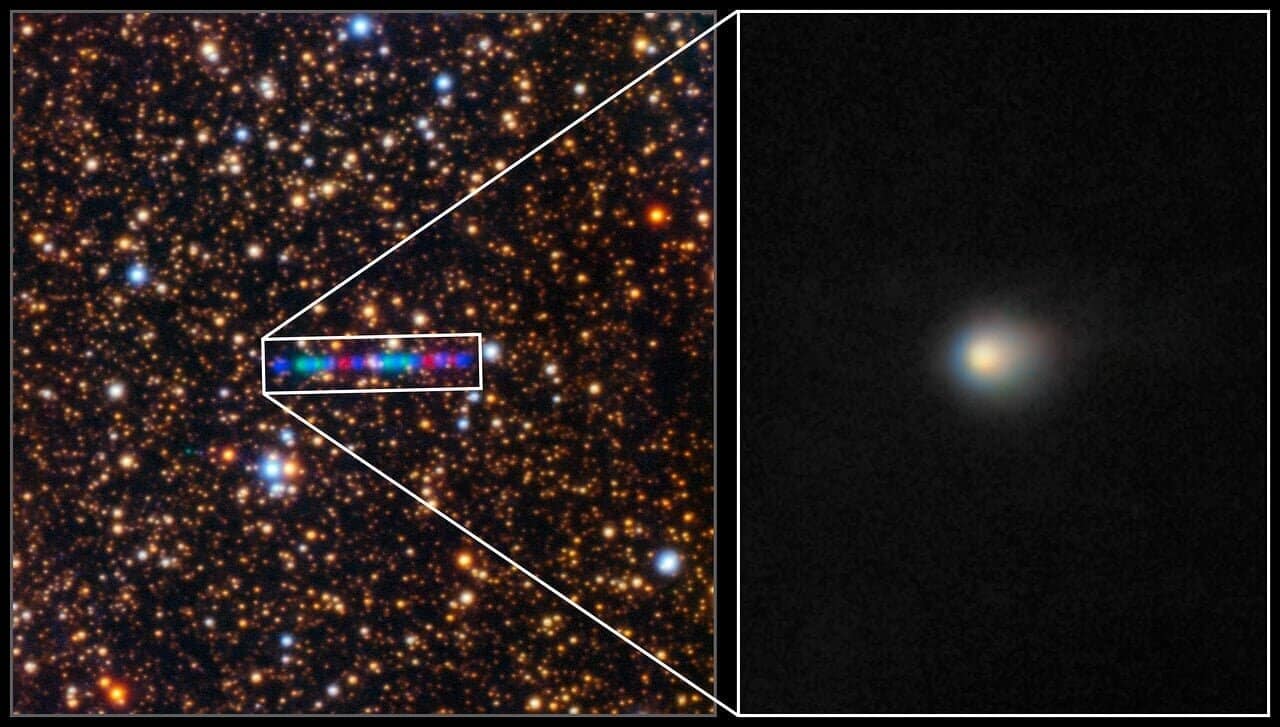
Cape Canaveral, FL – An interstellar visitor is officially saying goodbye after spending months passing through the solar system, giving scientists a rare opportunity to study material from beyond our cosmic neighborhood.
According to NASA, comet 3I/ATLAS made its closest approach to Earth early Friday, Dec. 19, coming within 168 million miles (270 million kilometers) at about 1 a.m. EST. With that milestone complete, the comet is now heading back toward the outer solar system — and eventually out into the Milky Way.
First detected on July 1, 2025, by NASA’s Asteroid Terrestrial-impact Last Alert System (ATLAS), 3I/ATLAS is only the third known interstellar object ever observed passing through the solar system. The previous two were 1I/‘Oumuamua in 2017 and 2I/Borisov in 2019.
Unlike comets native to our solar system, scientists believe 3I/ATLAS originated in the Milky Way’s “thick disk,” a much older region of the galaxy. That means the comet could be up to 7 billion years old, significantly older than the 4.6 billion-year-old solar system.
“All non-interstellar comets formed alongside the solar system,” said University of Oxford astronomer Matthew Hopkins. “Interstellar visitors, however, can be far older, and 3I/ATLAS is very likely the oldest comet we’ve ever seen.”
The comet also surprised researchers during its closest pass to the sun on Oct. 29, when it brightened far more than expected. Data from STEREO spacecraft, SOHO, and NOAA’s GOES-19 satellite captured the unusual behavior, though scientists say the cause remains unclear.
While 3I/ATLAS is now on its way out, astronomers say the information gathered during its brief visit will shape research for years, offering new insight into how planetary systems form across the galaxy.


