

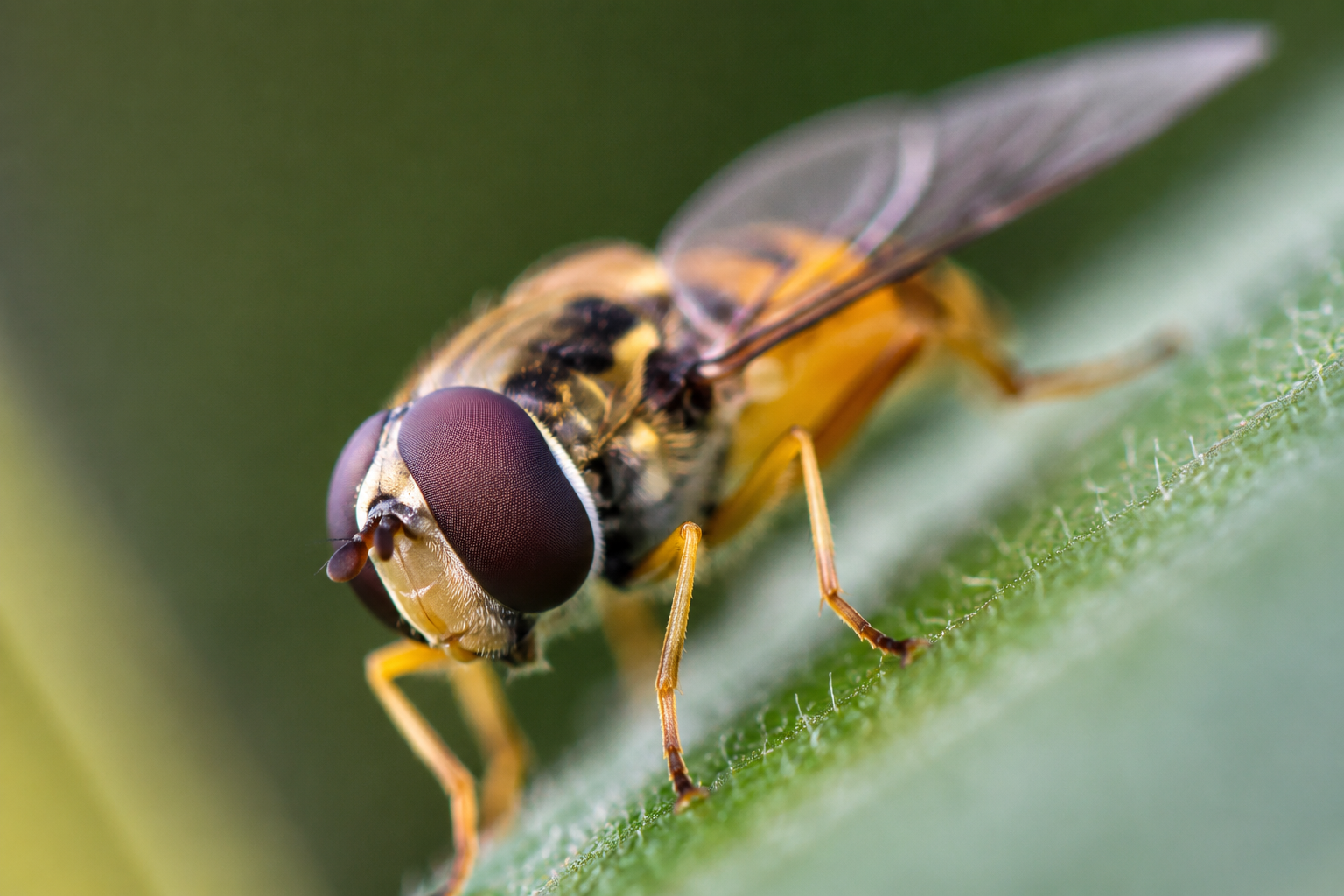

Urbana, IL – Many Illinois residents may mistake them for bees, but hoverflies are emerging as one of the state’s most important and overlooked pollinators during National Pollinator Week.
According to University of Illinois Extension, hoverflies, also known as syrphid flies, are considered the second most important pollinators after bees. The insects are commonly found visiting flowers throughout Illinois and play a significant role in pollination and pest control.

Hoverflies are often confused with bees because of their yellow-and-black markings, but researchers note there are several key differences. Hoverflies have one pair of wings, while bees have two pairs. They also have short antennae and can hover nearly motionless in the air, a behavior that helps distinguish them from bees and wasps.
Beyond pollination, hoverflies provide another benefit that gardeners may appreciate. Female hoverflies frequently lay eggs near aphid colonies, and once the larvae hatch, they begin feeding on aphids and other soft-bodied garden pests.
University of Illinois Extension says a single hoverfly larva can consume between 20 and 30 aphids per day and may eat up to 400 aphids before reaching adulthood. The larvae also feed on pests such as scale insects, mealybugs, and thrips, making them valuable allies in home gardens and agricultural settings.
Researchers note that hoverflies visit a wide variety of flowering plants and can transport pollen across greater distances than many bees, helping support plant reproduction throughout the growing season.
As pollinator awareness efforts continue across Illinois, experts encourage residents to recognize hoverflies as beneficial insects rather than pests. Their dual role as pollinators and natural pest controllers makes them an important part of the state’s ecosystem.
