

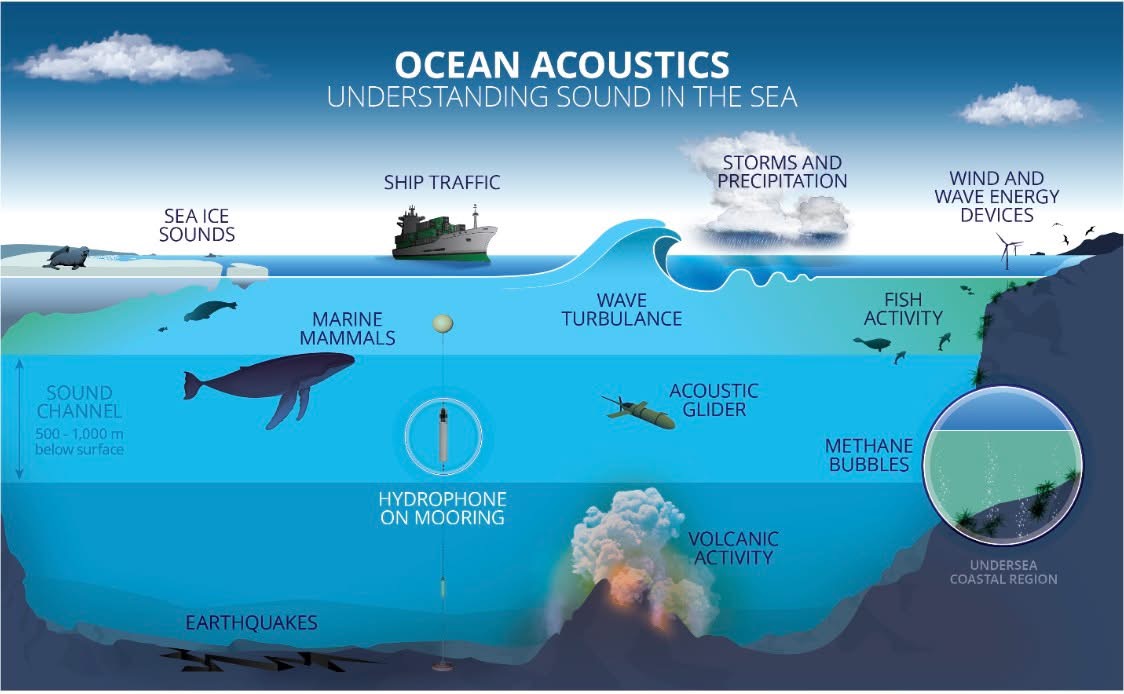
Portland, OR – A new federal study has revealed that global shipping slowdowns during the COVID-19 pandemic created a rare and quieter ocean environment, reducing noise levels in the Pacific and Arctic by nearly one-third.
According to NOAA’s Pacific Marine Environmental Laboratory and Oregon State University, scientists analyzed long-term acoustic data from hydrophone stations in Alaska, the Pacific Northwest, and the Arctic. They found that ocean noise dropped by as much as 2 decibels — about 30% — in 2020 compared with pre- and post-pandemic years. Researchers say the reduction was largely linked to the steep decline in commercial ship traffic when worldwide trade was disrupted.
“The pandemic gave us an unplanned experiment,” said Robert Dziak, acoustics program manager at NOAA. “Our findings can help provide a scientific basis for creating quieter marine habitats, particularly in areas important for vulnerable species.”
The study examined sound in frequencies tied to vessel activity, which overlap with whale communication. While not designed to directly measure impacts on marine mammals, scientists noted that reduced noise likely made it easier for species such as blue whales to communicate over greater distances without interference from ships.
Noise levels began rising again in late 2020 as shipping resumed, but the findings offer a benchmark for understanding how human activity affects marine ecosystems. NOAA researchers said the data underscores the importance of long-term acoustic monitoring to track environmental changes.
“We had a rare glimpse of a less noisy ocean,” said Dziak. “It’s given us valuable baseline data for future conservation efforts and a deeper understanding of our planet’s underwater soundscape.”
This article was produced by a journalist and may include AI-assisted input. All content is reviewed for accuracy and fairness.
Follow us on Instagram & Facebook for more relevant new stories and SUPPORT LOCAL INDEPENDENT NEWS! Have a tip? Message us!


