

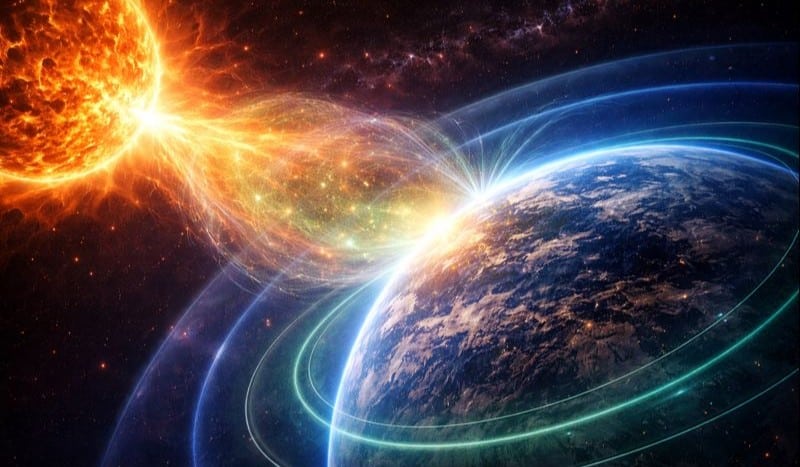
Madison, Wisconsin – A rare G4 (Severe) solar storm is expected to impact Earth on Jan. 20, prompting increased monitoring of Wisconsin’s power grid and critical technology systems as federal space weather officials track incoming solar activity.
According to the National Oceanic and Atmospheric Administration’s Space Weather Prediction Center, a coronal mass ejection (CME) launched from the Sun late last week is forecast to arrive late Sunday into Monday. G4-level geomagnetic storms are uncommon and can interfere with power transmission systems, satellite operations, GPS accuracy, and some radio communications, particularly at higher latitudes.

Wisconsin is considered more exposed than many states due to its northern latitude, extensive transmission lines, and proximity to the Great Lakes, which support major shipping routes, aviation corridors, and industrial activity. NOAA officials emphasize that widespread power outages are not expected, but utilities typically increase monitoring during severe space weather events to protect transformers and maintain grid stability.
For most residents, the solar storm itself will not be noticeable. Experts explain that geomagnetic activity can introduce electrical currents into long-distance transmission lines, reducing the grid’s margin for error. Grid operators may adjust system loads, reroute power, or take precautionary steps if conditions intensify.
Cell phone service and internet connectivity are expected to remain largely unaffected. However, minor GPS inaccuracies are possible, particularly affecting aviation operations, marine navigation on the Great Lakes, and precision timing systems used by transportation and emergency services.
As a visible side effect, auroras may be visible across northern Wisconsin, with possible visibility farther south if geomagnetic activity strengthens beyond current forecasts.
NOAA forecasters say geomagnetic activity could persist at lower levels into Tuesday.


