

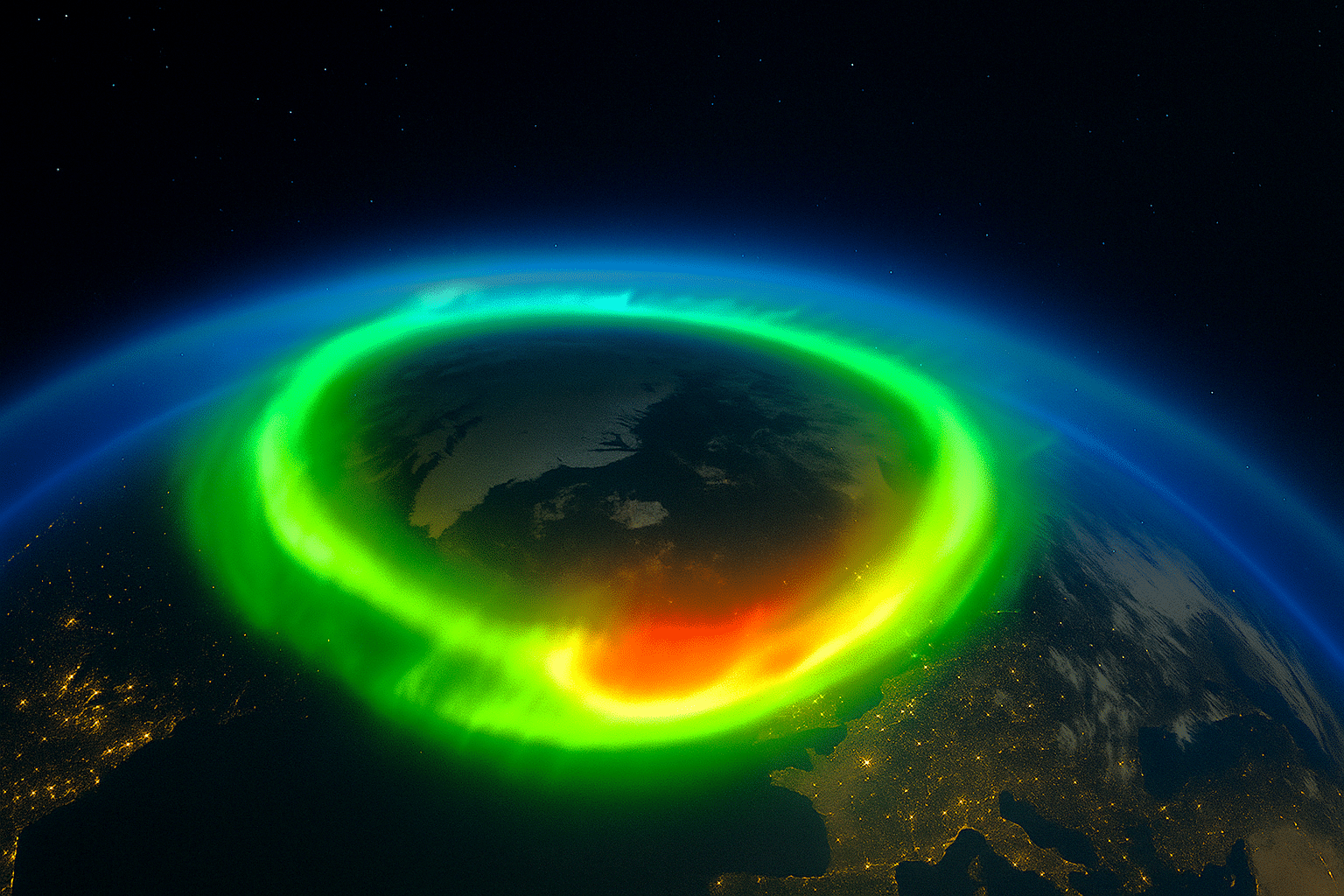
Minneapolis, MN – Residents across the Upper Midwest could have one of the better chances in the Lower 48 to see the aurora borealis overnight tonight into early Friday, as increased solar activity raises the likelihood of northern lights visibility between Thursday night, Jan. 2, and Friday morning, Jan. 3, 2026.
According to the NOAA Space Weather Prediction Center, geomagnetic conditions are forecast to reach a Kp index of 6, indicating a moderate geomagnetic storm. These conditions are strong enough to push the auroral oval southward, placing much of the Upper Midwest within potential viewing range.
The best time to look is expected after midnight, when geomagnetic activity typically peaks and skies are darkest. States with the highest likelihood include Minnesota, northern Wisconsin, and Michigan’s Upper Peninsula, especially in rural areas with minimal light pollution and clear views toward the northern horizon.
Communities farther south, including central Wisconsin, northern Iowa, and parts of northern Illinois, may still see faint auroral activity if conditions intensify or skies remain exceptionally clear. Urban areas such as Minneapolis–St. Paul, Duluth, Green Bay, and Marquette may experience reduced visibility due to city lights, though long-exposure photography can often reveal colors not visible to the naked eye.
Auroras occur when charged particles from the sun interact with Earth’s magnetic field, energizing gases in the upper atmosphere. Kp 6 geomagnetic events have historically produced visible auroras across the Upper Midwest, particularly during winter months when nights are long and dark.
NOAA officials advise skywatchers to prepare for bitterly cold overnight temperatures, dress in layers, and limit extended exposure while viewing.


