

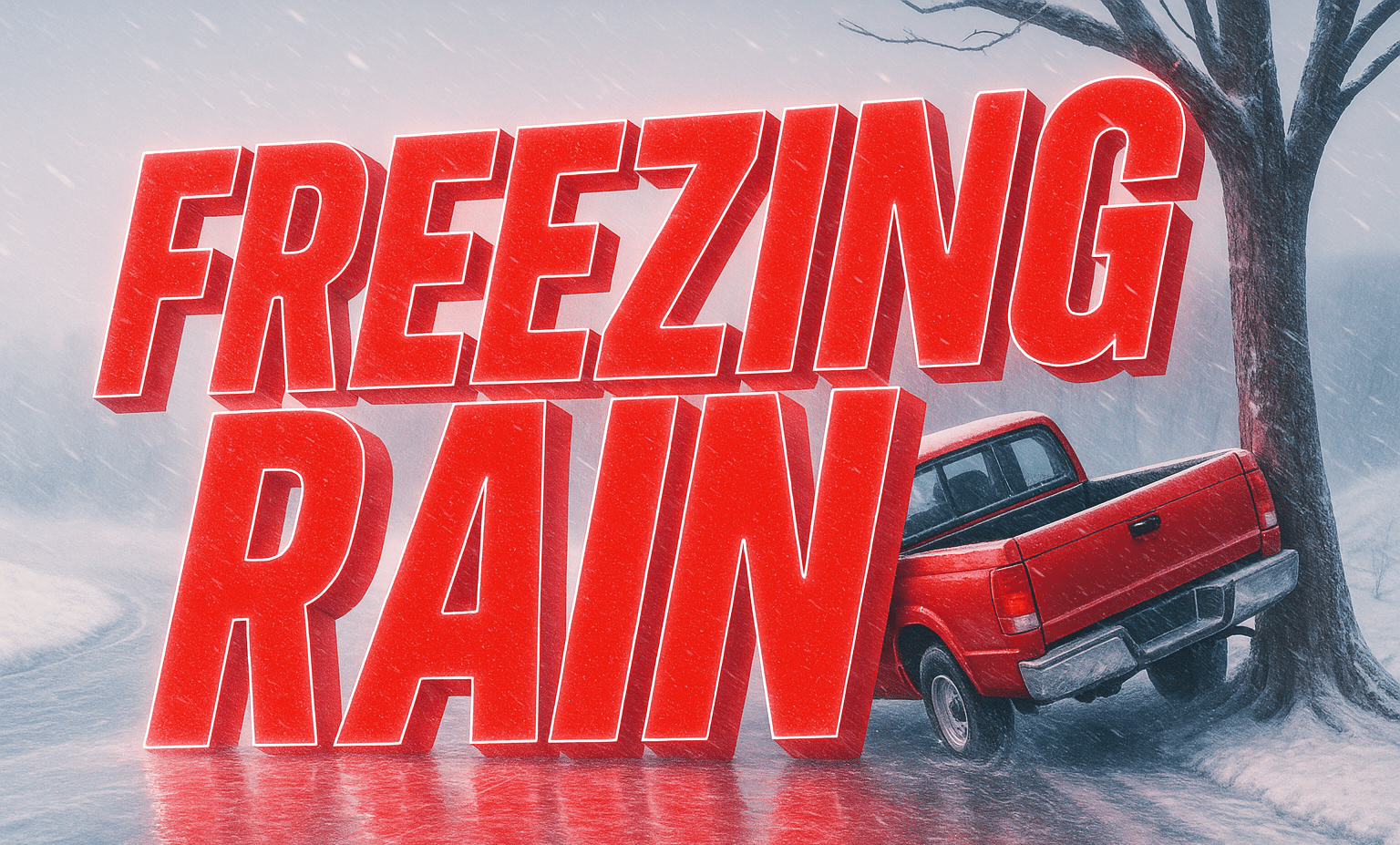
Spokane, Washington – Pockets of light freezing rain are expected to develop early Wednesday morning across parts of eastern Washington, raising concerns for slick travel conditions during the morning commute.
According to the National Weather Service in Spokane, areas of light freezing rain are forecast to develop between approximately 1 a.m. and 5 a.m. Wednesday across portions of the Columbia Basin and the Palouse, then shift northeast through the morning hours. While ice accumulations are expected to remain minimal, even trace amounts can create hazardous conditions on untreated surfaces.

Forecasters expect ice accumulations ranging from a trace to around 0.03 inches, with the greatest confidence for light icing in the lower Columbia Basin and western Palouse. Major travel corridors potentially impacted include Interstate 90, U.S. Route 395, State Route 26, and nearby secondary roads.
The National Weather Service emphasized that bridges, overpasses, sidewalks, and elevated roadways are most susceptible to becoming slick, even when surrounding roads appear wet. Reduced traction could pose challenges for early-morning commuters, commercial drivers, students, and emergency responders.
The freezing rain threat is expected to diminish by late Wednesday morning as temperatures gradually rise and precipitation transitions to rain. However, lingering slick spots may persist in shaded or elevated areas.
Drivers are urged to slow down, increase following distance, and allow extra travel time Wednesday morning. Pedestrians should use caution on sidewalks, parking lots, and stairs, where thin ice may be difficult to see.
This event is part of an unsettled midweek weather pattern affecting the Inland Northwest, with temperatures hovering near freezing during the overnight and early-morning hours.
The National Weather Service advises residents to monitor local forecasts and road condition updates, especially if traveling early Wednesday, as even minor icing can lead to disproportionate travel impacts.


