

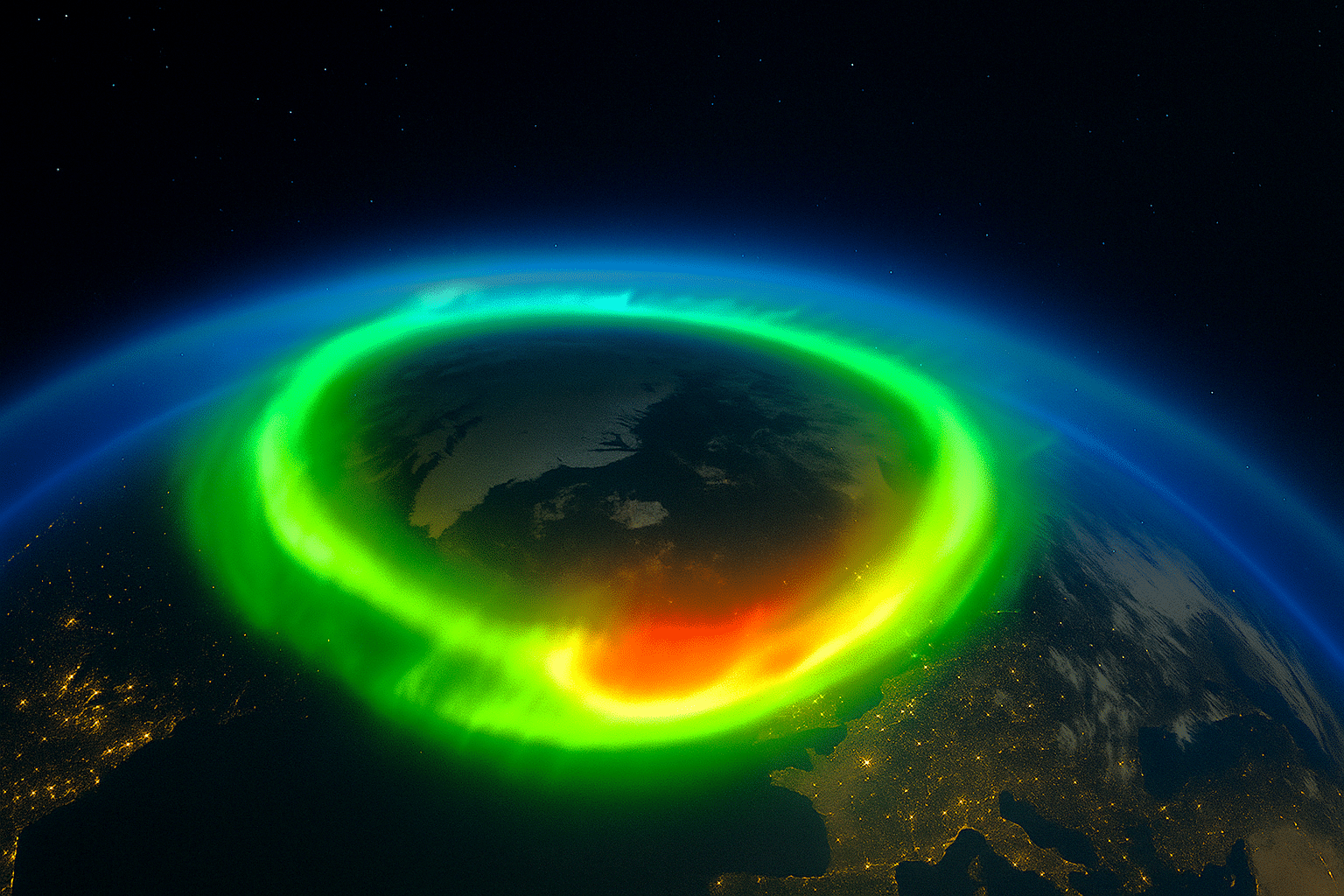
BOULDER, Colo. – A glancing blow from a coronal mass ejection (CME) is expected to reach Earth between Tuesday night and Wednesday, prompting NOAA’s Space Weather Prediction Center to issue a G2 (Moderate) Geomagnetic Storm Watch for Dec. 3–4 (UTC).
The CME was launched from Region 4299 following an X1.9-class solar flare observed early December 1. While most of the solar ejecta was directed east of Earth, forecasters say a peripheral portion of the plasma cloud is likely to brush Earth’s magnetic field, sparking geomagnetic disturbances.
NOAA scientists note some uncertainty in the storm’s exact arrival time and intensity but expect moderate G2-level conditions, capable of causing intermittent voltage irregularities in power systems and temporary impacts to high-frequency radio communications.
Auroras could become visible as far south as New York, the Great Lakes, and northern Plains into Idaho, depending on the storm’s strength and the local geomagnetic index. Skies permitting, late-night observers in northern-tier states may catch a glimpse of faint red or green glows near the horizon.
The Space Weather Prediction Center advises operators of sensitive satellite, navigation, and power infrastructure to monitor official updates through spaceweather.gov for real-time geomagnetic alerts and solar activity forecasts.


