

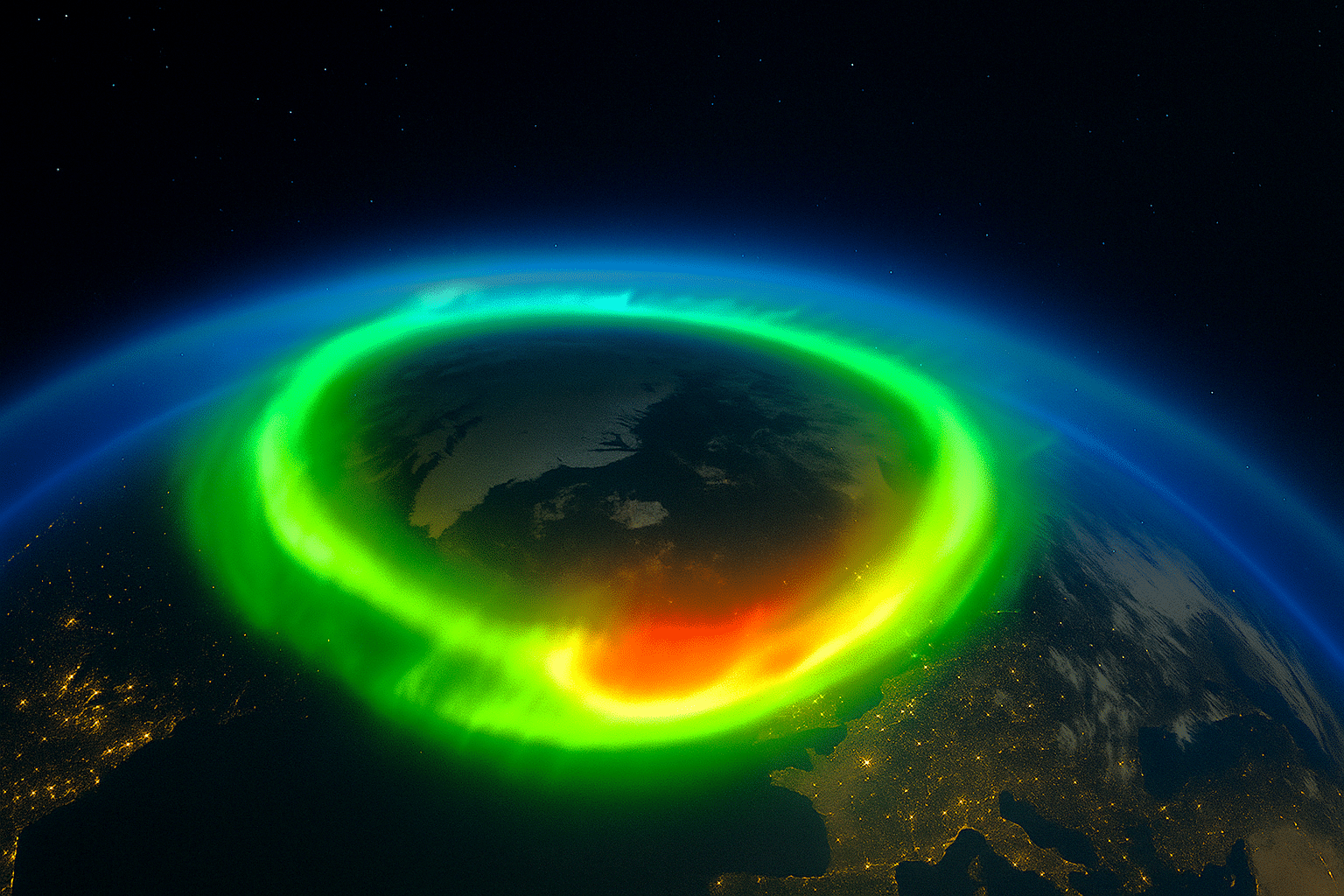
Denver, CO – A rare aurora borealis display could be visible across parts of the Rocky Mountain region Monday night into Tuesday, as a strong solar storm heads toward Earth, according to the NOAA Space Weather Prediction Center.
The agency has issued a G3 (Strong) Geomagnetic Storm Watch for December 9, warning that a coronal mass ejection (CME) from the Sun, associated with an M8.1 solar flare on December 6, is expected to impact Earth early to midday Monday. This could trigger widespread geomagnetic activity and make the Northern Lights visible farther south than usual.
According to NOAA’s forecast, aurora visibility may extend into Montana, Wyoming, Colorado, and Utah, particularly in rural and high-elevation areas where skies are darkest. Viewers in places like Bozeman, Cheyenne, and Fort Collins could glimpse green or pink waves of light dancing along the northern horizon.
G3-level geomagnetic storms can cause minor satellite or radio interference, but NOAA notes that these effects are typically limited. The public is encouraged to look north late Monday night through early Tuesday morning, with the best viewing conditions away from city lights.
Residents should monitor NOAA’s Space Weather Prediction Center for updated aurora forecasts and timing as the CME’s arrival nears.


