

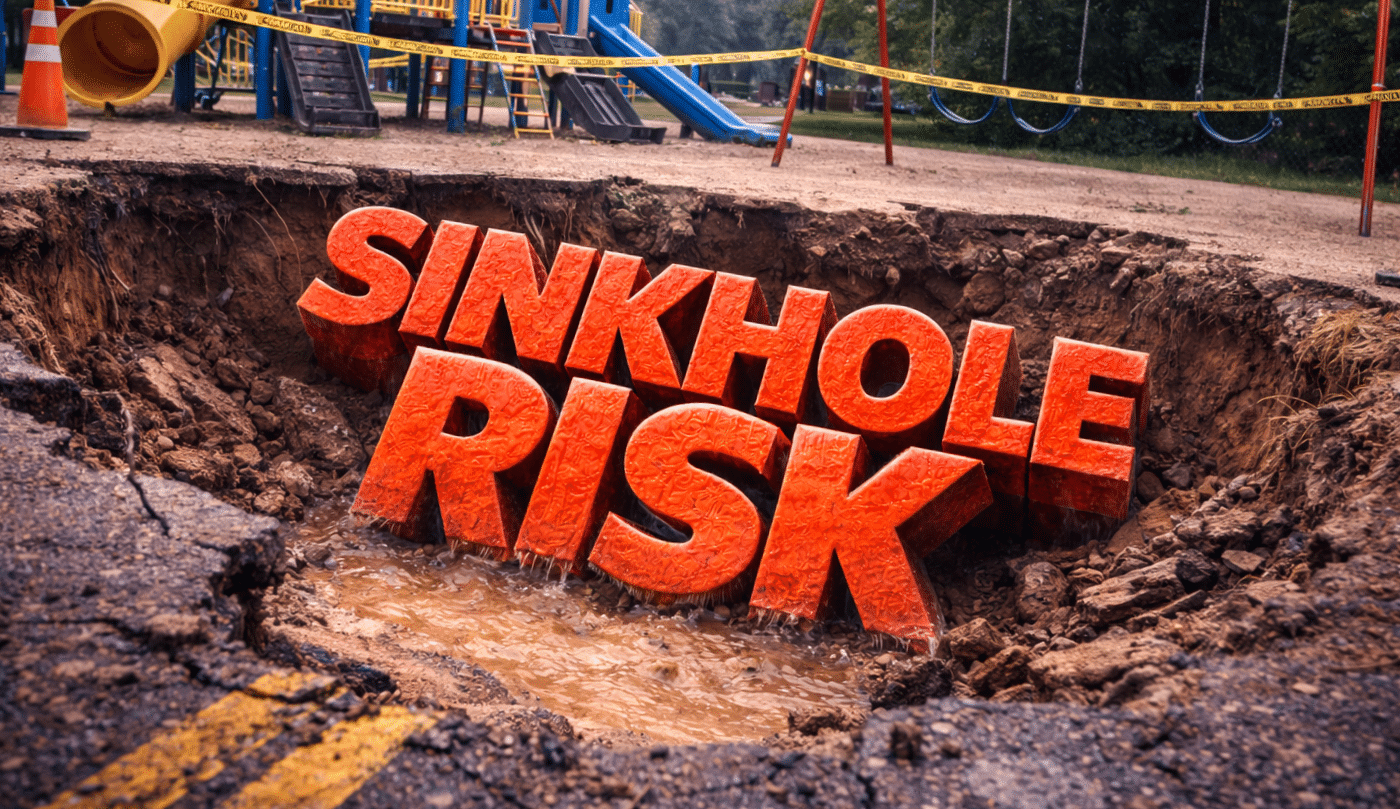
Oklahoma City, Okla. — Oklahoma homeowners in parts of the state face a moderate risk of sinkholes, and experts say early warning signs often appear quietly before noticeable ground failures occur.
According to the U.S. Geological Survey, sections of Oklahoma sit atop gypsum, limestone, and other soluble rock formations that can dissolve as water moves underground. This type of terrain is associated with karst processes, which can gradually create underground voids that weaken support beneath the surface. Prolonged rainfall, fluctuating groundwater levels, and seasonal weather changes can accelerate these processes.

Geologists emphasize that sinkholes rarely form suddenly. Instead, they typically develop over extended periods, with subtle surface changes acting as early indicators of underground erosion. Transitional seasons and extended wet periods are often when these warning signs become more visible as water moves more freely through soil and rock layers.
Homeowners may notice shallow depressions forming in yards, soil that feels soft or spongy underfoot, or new areas of standing water that linger after rainfall. Cracks appearing in sidewalks, driveways, patios, or foundation walls can also reflect gradual ground movement rather than routine settling.
Other warning signs are frequently overlooked. Leaning fences, separating steps, tilting trees, or small gaps forming between soil and concrete surfaces may signal changes beneath the ground rather than normal wear and tear.
Moderate sinkhole risk areas in Oklahoma include parts of central and western regions, where gypsum-rich formations and groundwater movement are more common. Experts note that risk can vary significantly by neighborhood depending on local geology, drainage patterns, and soil composition.
The USGS cautions that once visible surface changes appear, erosion beneath the ground may already be underway. Homeowners are advised not to fill depressions or cover affected areas, as doing so can mask developing hazards and delay proper evaluation.
Experts stress that awareness — not alarm — remains key. Monitoring subtle changes and seeking evaluation from local officials or qualified professionals can help reduce damage and improve safety as ground conditions evolve.


