

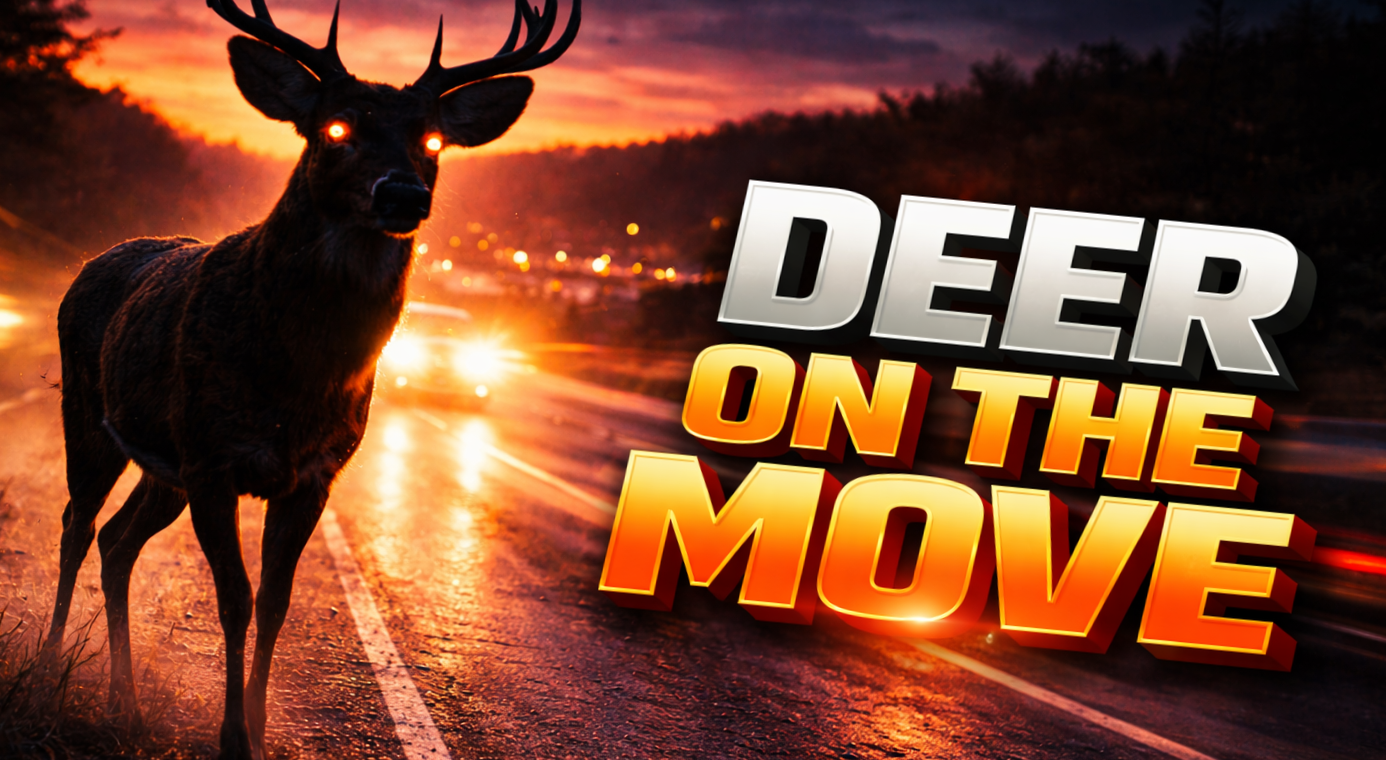
Midwest – As winter tightens its grip across the Midwest and daylight hours remain among the shortest of the year, drivers across Illinois, Indiana, Michigan, Wisconsin, Minnesota, and Iowa are being warned about a regional danger that spikes sharply this time of year: wildlife collisions after dark.
According to state wildlife and transportation agencies across the region, winter conditions force animals to alter their movement patterns, bringing them closer to roads and highways—often during evening and early morning hours when visibility is reduced. Shorter days mean more drivers are traveling in darkness just as wildlife activity increases.

White-tailed deer are the primary concern across all six Midwest states, with some of the highest collision rates in the nation reported annually. In Michigan, Wisconsin, and Minnesota, forested terrain, snow cover, and rural highways increase the risk. In Illinois, Indiana, and Iowa, collisions frequently occur along farmland edges, suburban growth areas, and high-speed commuter routes.
Wildlife biologists note that winter feeding behavior causes deer to move earlier in the evening and later in the morning, overlapping with commute times and significantly raising crash risk. Snowbanks, plowed shoulders, and roadside vegetation often funnel animals directly toward roadways.
Transportation officials across the Midwest urge drivers to slow down in areas marked with wildlife crossing signs and remain especially alert between sunset and sunrise. High beams should be used when possible, but drivers are cautioned not to swerve suddenly to avoid animals, as icy roads and high speeds can lead to rollovers or multi-vehicle crashes.
Drivers are also encouraged to scan roadsides carefully near wooded areas, open fields, river corridors, and less-developed stretches of road. Officials stress that deer often travel in groups, meaning if one animal crosses, others may follow within seconds.
As winter continues and nights remain long, officials say wildlife-related crashes will remain a serious regional hazard across the Midwest. Drivers are urged to use extra caution during evening and early morning travel, when animal movement is at its peak.


