

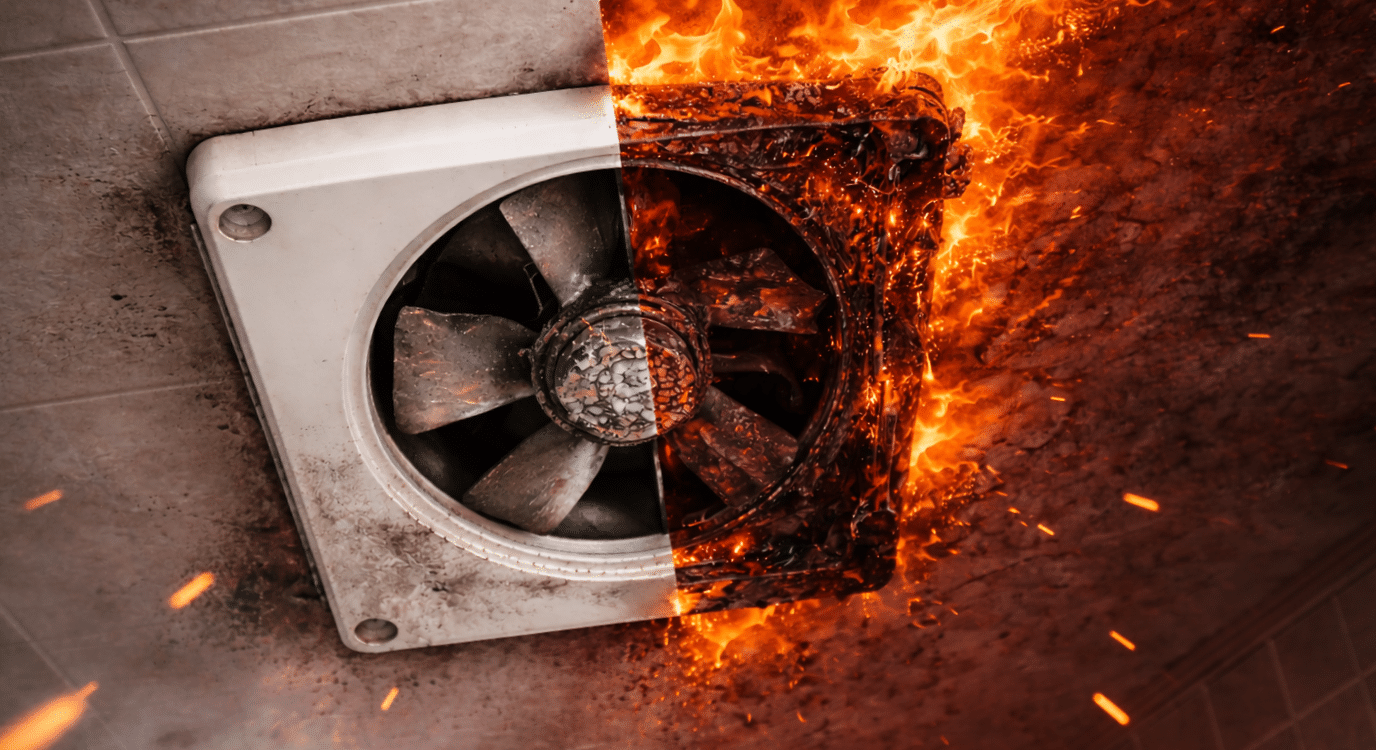
Boston, Massachusetts — Massachusetts homeowners are being urged to inspect bathroom exhaust fans this winter amid warnings that aging or poorly maintained units can overheat and ignite during extended cold-weather use.
Fire safety officials say bathroom exhaust fans are designed to remove moisture, but dust and lint buildup inside the housing can restrict airflow and trap heat. During winter months, the risk increases as fans are often run longer to manage condensation while windows remain closed and ventilation is limited.

American Family Insurance, which tracks residential fire losses nationwide, warns that scraping or grinding sounds when a bathroom fan starts, or odors resembling smoke or burning, may indicate internal electrical failure. The insurer advises residents to shut the fan off immediately and have it inspected if those warning signs appear.
Additional urgency comes from a 2019 forensic study by GAI Engineers, which examined how bathroom exhaust fans behave during fire conditions. The study found that electrical arcing can originate inside the fan-light housing itself, rather than only from external fire exposure. During controlled testing, internal temperatures reached between 357 and 1,242 degrees Fahrenheit, levels capable of damaging wiring insulation and triggering ignition.
Researchers also noted that steel fan housings can conceal internal damage, meaning a unit may appear intact from below even as wiring inside deteriorates — a condition that may go unnoticed until a fire occurs.
Massachusetts fire officials say winter risk is elevated in older homes and multi-unit buildings, particularly in urban areas with aging housing stock and long-term rental units. Fans left running unattended for extended periods further increase the likelihood of overheating.
Residents are advised to turn bathroom exhaust fans off after use, clean grilles and housings regularly using a vacuum or soft brush, and consider installing timer switches to prevent prolonged operation. Any fan that vibrates excessively, runs unusually hot, or produces abnormal noise should be replaced.
The warning is especially relevant for renters, students, and young workers living in older housing, where winter maintenance issues may go undetected.


