

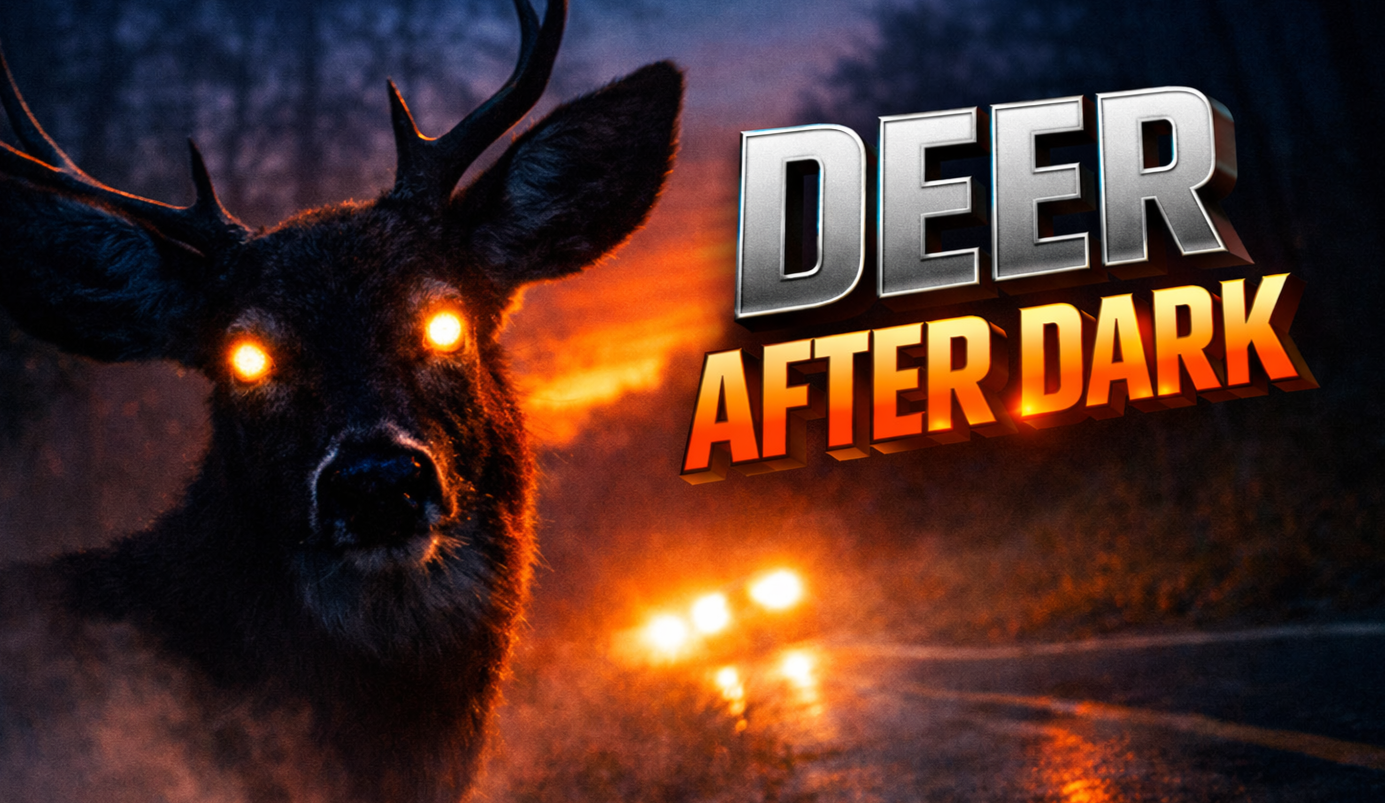
Portland, ME – As winter conditions settle in across Maine and nights grow longer, drivers near Portland are being warned about a seasonal danger that spikes sharply this time of year: wildlife collisions after dark.
According to Maine wildlife officials and transportation agencies, winter forces animals to change their behavior in ways that bring them closer to roadways—often during evening and early morning hours when visibility is lowest. Shorter days mean more drivers are traveling in darkness just as wildlife becomes more active.

Officials say deer, moose, coyotes, and other wildlife are pushed toward roads as food becomes scarce and snow or frozen ground limits movement. In southern Maine, animals frequently follow plowed roads, roadside vegetation, and suburban edges near Portland, placing them directly in traffic corridors.
Wildlife biologists note that winter alters feeding and movement patterns, causing animals to move earlier in the evening and later in the morning. That timing overlaps with commute hours, increasing the risk of collisions. Deer crashes are common statewide, while moose collisions—though less frequent—can be especially dangerous due to the animal’s size and height.
The Maine Department of Transportation urges drivers to slow down in areas marked with wildlife crossing signs and remain alert between sunset and sunrise. High beams should be used when possible, but officials warn drivers not to swerve suddenly to avoid animals, as that can lead to rollovers or crashes with other vehicles.
Drivers are also encouraged to scan roadsides carefully, especially near wooded areas, open fields, and less-developed stretches of road around Portland. Wildlife often travels in groups, meaning if one animal crosses, others may follow moments later.
As winter continues and daylight remains limited, officials say wildlife-related crashes will remain a serious risk across Maine. Drivers are urged to use extra caution during evening and early morning travel, when animal movement is at its peak.


