

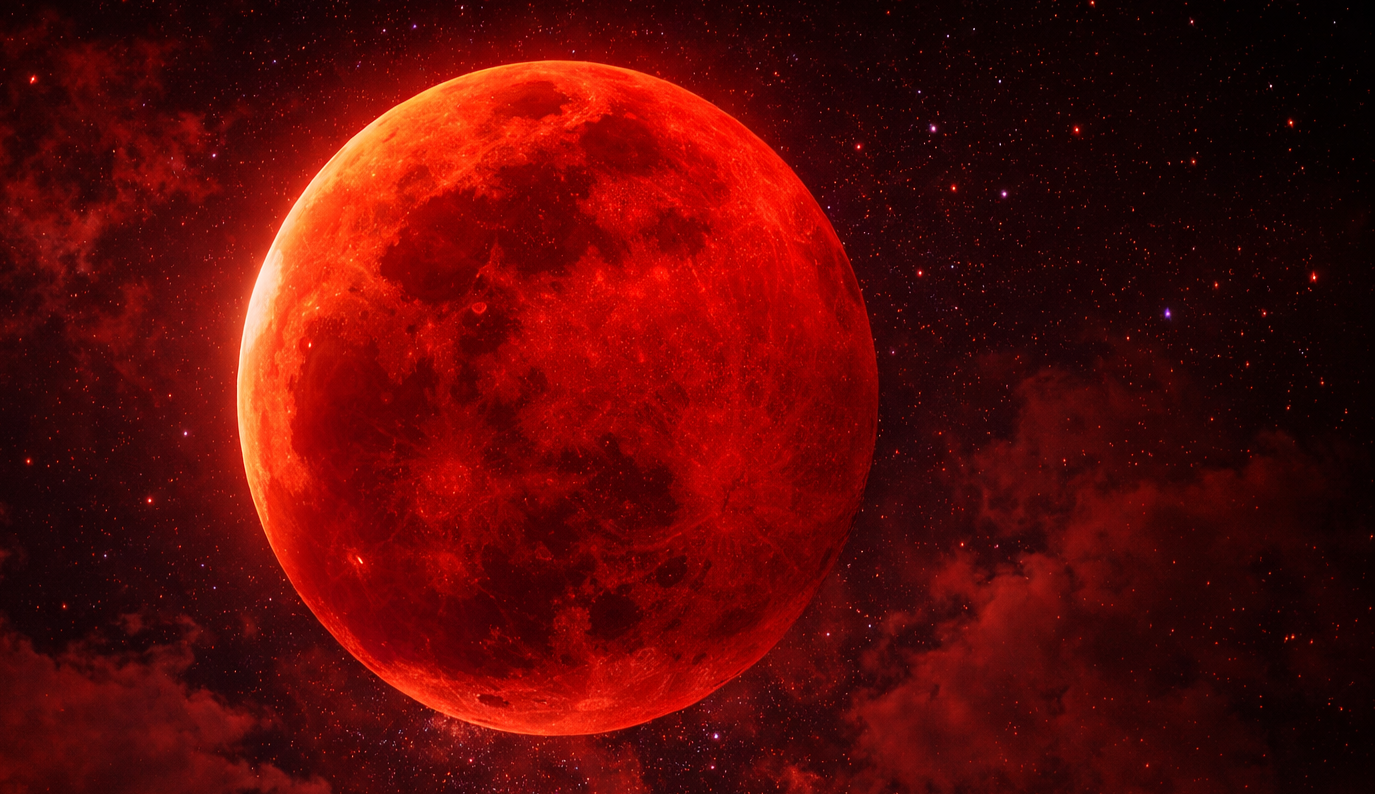
Los Angeles, California – Southern California residents should mark March 3 now, when a rare 58-minute Blood Moon will unfold from 3:04 to 4:03 a.m. Pacific Time, delivering the region’s last visible total lunar eclipse until 2028.
According to NASA eclipse timing data, totality begins at 3:04 a.m. PT on March 3 and peaks at 3:33 a.m., when the Moon turns deep red inside Earth’s shadow. The Moon will sit low in the western sky during totality, with the richest red hues visible before early dawn light begins to brighten the horizon.

In Los Angeles, residents should move away from intense urban lighting and seek elevated west-facing viewpoints such as Griffith Observatory’s surrounding trails or coastal overlooks in Malibu. San Diego viewers can use open shoreline areas with a clear western horizon. Inland Empire communities, including Riverside and San Bernardino, benefit from darker desert skies east of the metro, while higher elevations in the San Gabriel and San Bernardino mountains may provide some of the best regional contrast.
The partial eclipse begins around 2:04 a.m. PT, giving night owls nearly an hour to watch Earth’s shadow steadily cover the Moon before totality. No eclipse glasses are required, and binoculars can enhance surface detail and deepen the copper-red tones.
Cloud cover could interfere, so checking local weather conditions on March 2 is essential. Once dawn brightens the sky on the morning of March 3, Southern California will not see another total lunar eclipse until 2028 — making this overnight event worth planning for now.


