

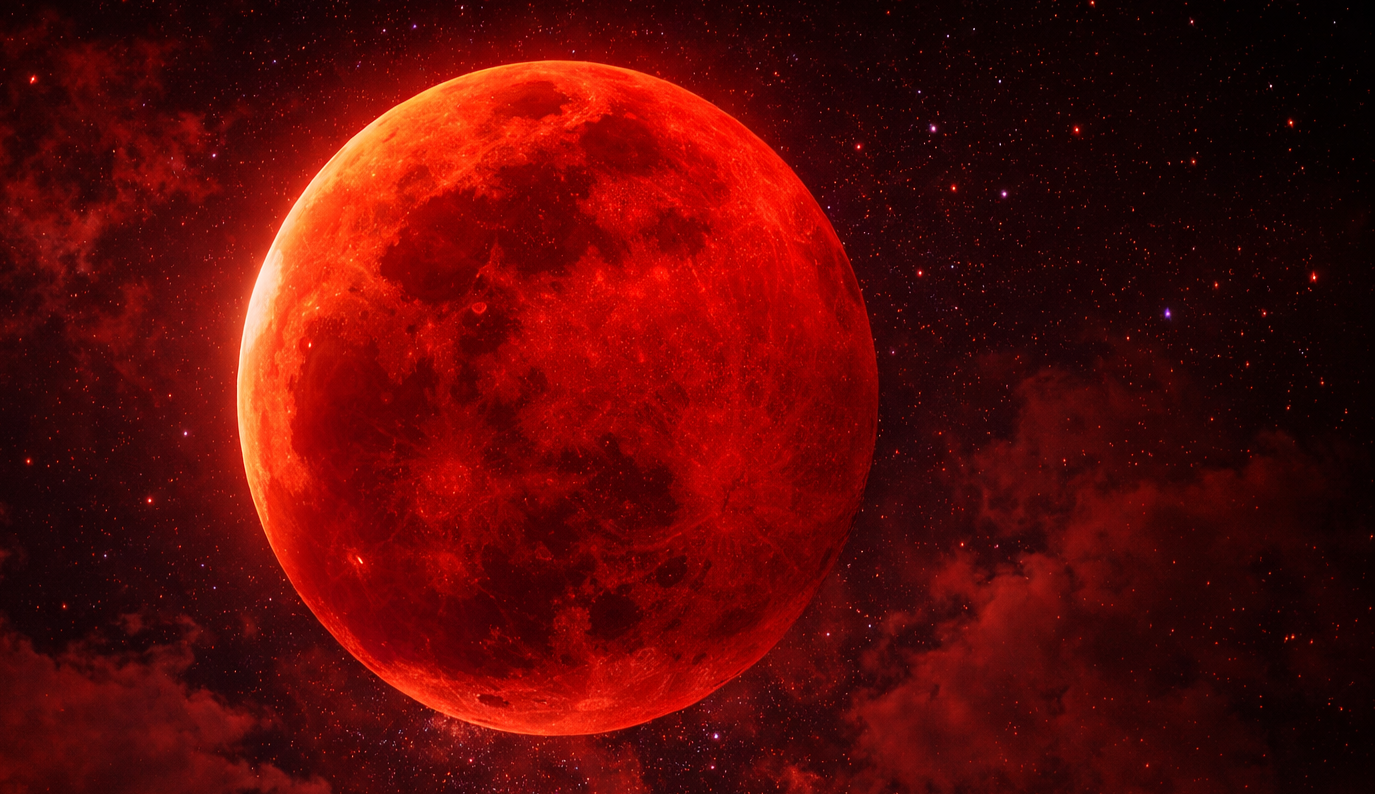
Indianapolis, Indiana – Hoosiers should mark March 3 now, when a rare 58-minute Blood Moon will unfold across the state, delivering Indiana’s last visible total lunar eclipse until 2028.
According to NASA eclipse timing data, totality begins at 6:04 a.m. Eastern Time on March 3 and peaks at 6:33 a.m., when the Moon turns deep red inside Earth’s shadow. In most of Indiana, totality runs from 6:04 to 7:03 a.m. ET. In the southwest corner of the state, including Evansville, which observes Central Time, totality occurs from 5:04 to 6:03 a.m. CT. The Moon will sit low along the western horizon and may set during totality, tightening the viewing window as sunrise approaches.

In Indianapolis, west-facing parks such as Eagle Creek Park offer clearer sightlines away from downtown lighting. Fort Wayne residents should seek open areas with an unobstructed western view. In South Bend, the Lake Michigan shoreline provides a broad horizon, while darker skies near Hoosier National Forest in southern Indiana may offer some of the best statewide visibility.
The partial eclipse begins about an hour earlier — 5:04 a.m. ET for most of the state and 4:04 a.m. CT in the southwest — allowing viewers to watch Earth’s shadow steadily cover the Moon before totality. No eclipse glasses are required, and binoculars can enhance surface detail and deepen the red hues.
Cloud cover could interfere, so checking local weather conditions on March 2 is essential. Once the Moon dips below the horizon the morning of March 3, Indiana will not see another total lunar eclipse until 2028 — making this pre-sunrise event worth planning for now.


