

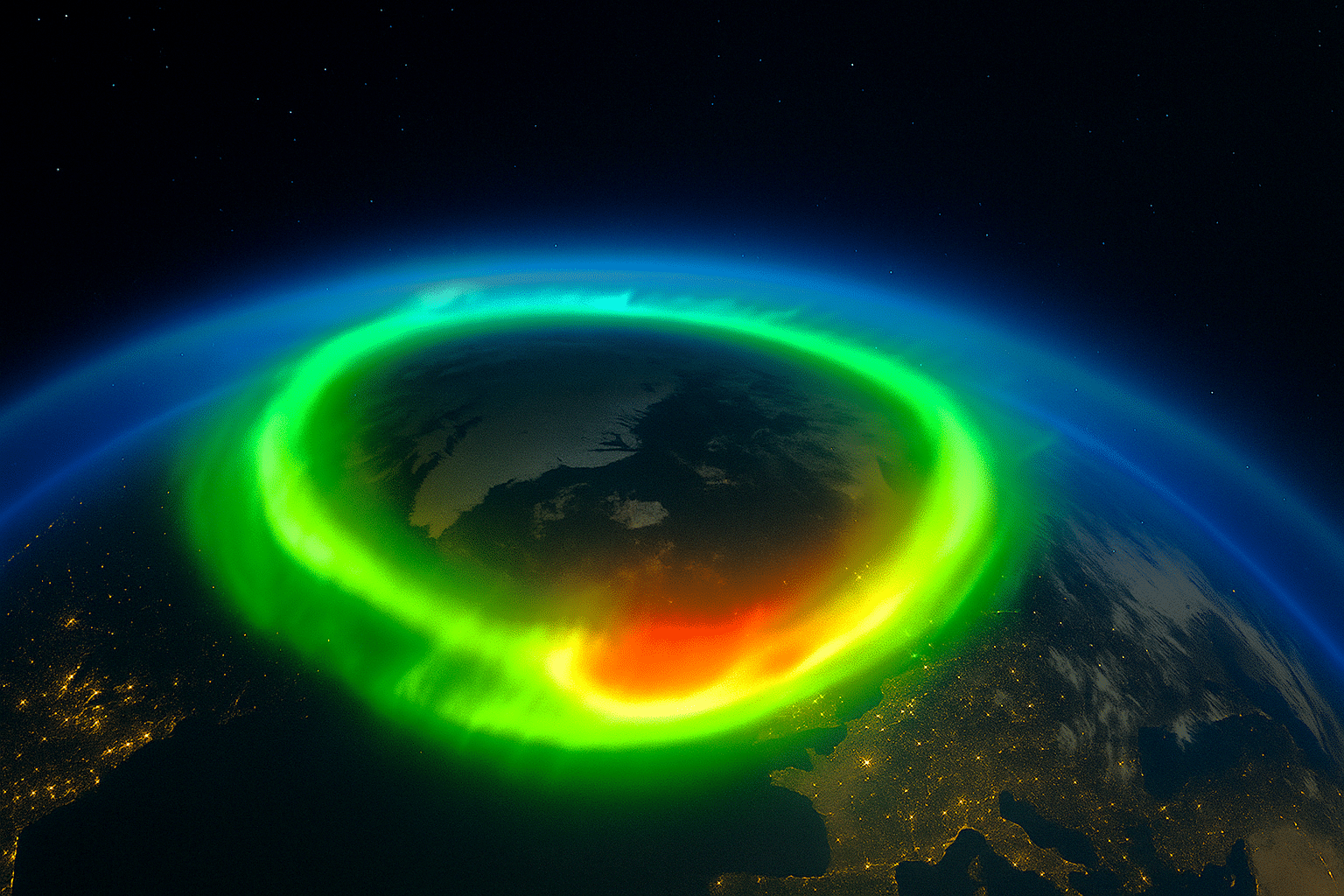
Springfield, IL – Illinois residents may have a rare chance to spot the Northern Lights late Thursday night into early Friday, January 8–9, as increased solar activity pushes auroras farther south than usual.
According to the National Oceanic and Atmospheric Administration (NOAA), a G1-level geomagnetic storm is expected to peak overnight. The storm is being driven by enhanced solar wind associated with a coronal mass ejection (CME) and a co-rotating interaction region (CIR)—solar disturbances that can expand auroral visibility into lower latitudes.
In Illinois, auroras are expected to be faint and low on the northern horizon, making viewing conditions challenging. The best chances will be in northern and rural parts of the state, particularly near the Wisconsin border and along Lake Michigan. Areas in McHenry, Boone, Jo Daviess, Stephenson, and Lake counties may offer better visibility due to darker skies and open northern views.
Residents in Rockford, Freeport, Waukegan, and parts of suburban Chicago could still catch a subtle glow if skies remain clear, though heavy light pollution may limit visibility. Viewing will be more difficult in downtown Chicago, Peoria, Springfield, and southern Illinois, but faint auroras are still possible under ideal conditions.
Cloud cover remains the biggest wildcard. Even strong geomagnetic storms cannot be seen through clouds, making clear skies essential. Aurora watchers are encouraged to monitor local weather forecasts along with NOAA space weather updates overnight.
For most Illinois viewers, the aurora may appear as a dim arc or pale glow rather than vivid colors. Cameras and smartphones using Night Mode or long-exposure settings often capture greens not easily visible to the naked eye.
If conditions align, this could be Illinois’ first potential aurora sighting of 2026.


