

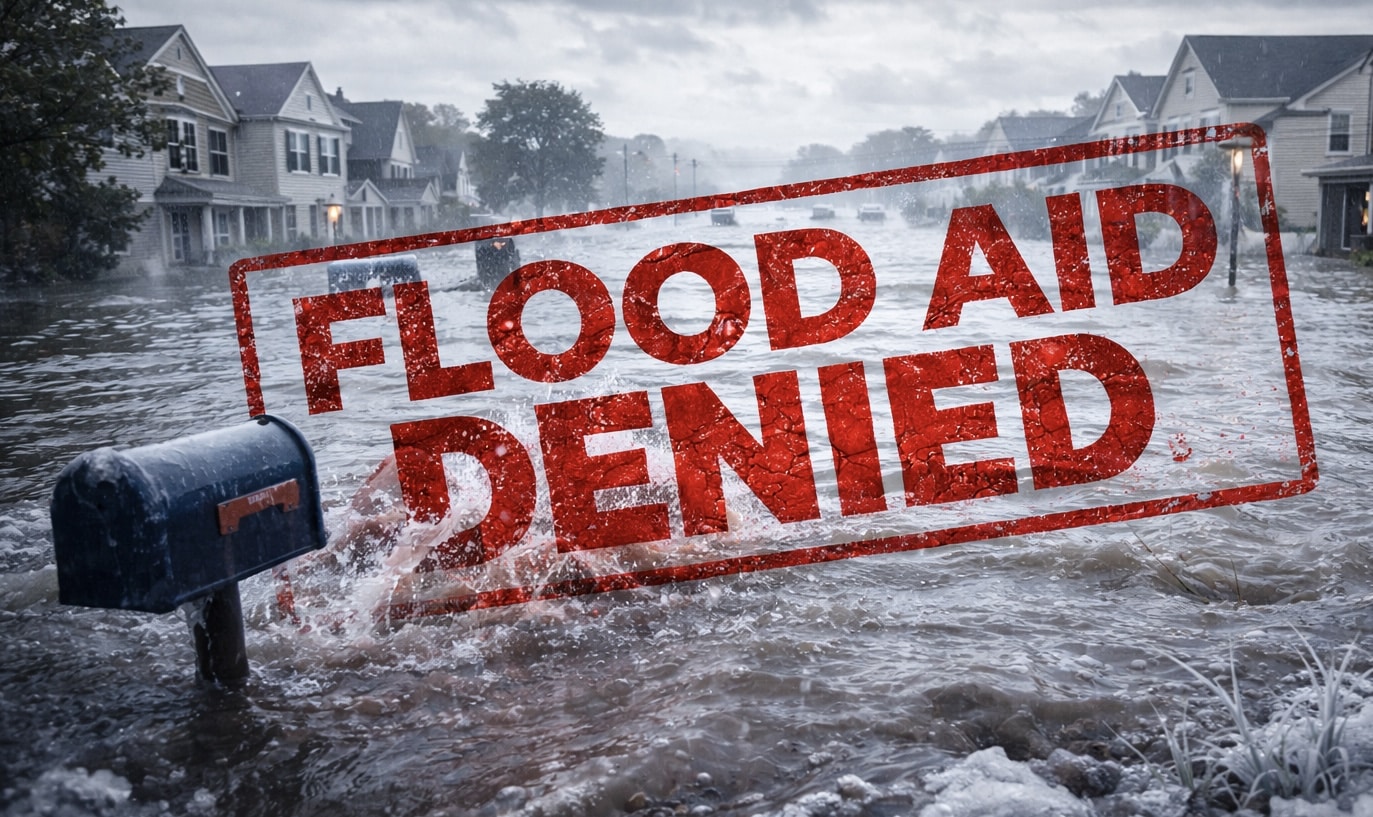
Springfield, IL – Illinois officials are condemning what they describe as a malicious federal decision after the Trump Administration, through the Federal Emergency Management Agency (FEMA), formally denied the state’s appeal for a major disaster declaration tied to severe storms and flooding last summer.
According to FEMA, a letter dated Friday, February 7, 2026, reaffirmed the agency’s earlier determination that supplemental federal assistance under the Stafford Act is not warranted. The denial blocks Individual Assistance for residents in Boone, Cook, Kane, McHenry, and Will counties, despite documented storm damage.

According to state officials, the storm system from August 16–19, 2025, brought severe flooding, straight-line winds, widespread power outages, damaged homes and businesses, and impassable roadways across large portions of Northern Illinois.
Illinois submitted its appeal on November 21, 2025, following joint Preliminary Damage Assessments conducted with FEMA and a second round of supplemental assessments in early November aimed at capturing delayed and cumulative damage impacts.
Governor JB Pritzker responded forcefully, characterizing the denial as politically motivated and harmful to working families still recovering months later.
“Let’s call this what this is: a politically motivated decision that punishes thousands of Illinois families in a critical moment of need. Playing politics with disaster relief funding is a new low, even for the Trump Administration,” Pritzker said. “Ignoring the realities of widespread damage from the August 2025 severe storms, speaks volumes about the federal government’s vindictive priorities and complete disregard for American livelihoods.”
Illinois Emergency Management Agency and Office of Homeland Security Acting Director Theodore ‘Ted’ Berger said the scope of damage documented during assessments justified federal assistance, even if FEMA disagreed.
“It is incredibly disappointing that an incident of this magnitude was not declared a major disaster,” Berger said. “While this federal support will not be forthcoming, we will continue working with local emergency management partners to assist communities in their long-term recovery.”
State officials say recovery efforts will now rely more heavily on state, local, and nonprofit resources as affected residents continue rebuilding without federal Individual Assistance.


