

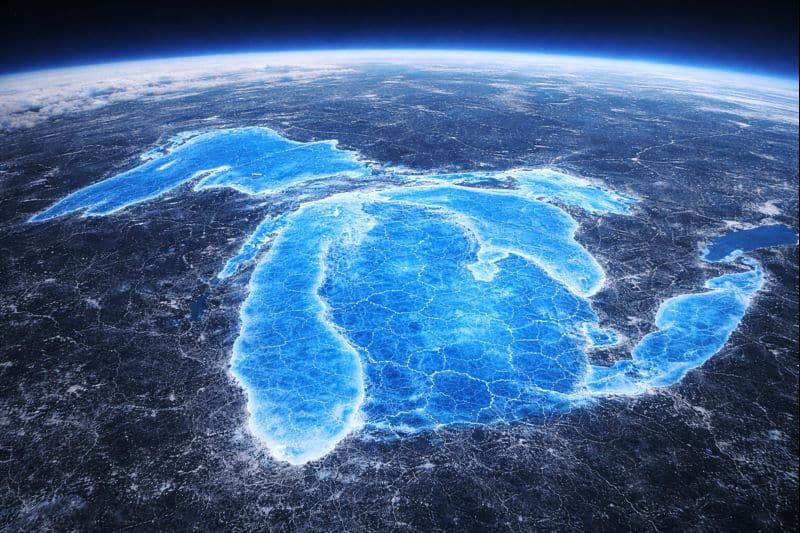
Great Lakes Region – Ice cover across the Great Lakes reached approximately 15 percent as of Monday, according to NOAA’s Great Lakes Environmental Research Laboratory.
Data from NOAA CoastWatch and the Great Lakes Surface Environmental Analysis show ice coverage continuing to build early in the 2026 winter season. The latest analysis, dated Jan. 5, places total lake ice at 14.98 to 15.0 percent, slightly above early January climatological averages.
Lake-by-lake data indicate the highest ice concentrations on Lake Erie, which reported roughly 34 percent coverage. Lake Huron followed at about 22 percent, while Lake Michigan measured near 12 percent. Lake Superior reported just over 8 percent ice cover, and Lake Ontario remained the least frozen at approximately 6 percent.

Historical records from NOAA show that Great Lakes ice coverage typically increases rapidly through January and February, often peaking between late February and early March. The long-term seasonal average maximum is near 40 percent, though yearly outcomes vary widely based on temperature patterns and storm tracks.
According to NOAA, ice development plays a key role in winter weather dynamics, including lake-effect snowfall and nearshore water temperatures. Expanding ice can also impact commercial shipping lanes and local fishing activity across the region.
Commuters and outdoor workers near the lakes may notice changing shoreline conditions as ice coverage expands, especially during colder overnight periods.
NOAA officials emphasize that ice conditions can change quickly and advise checking updated analyses through glerl.noaa.gov and weather.gov as winter progresses.


