

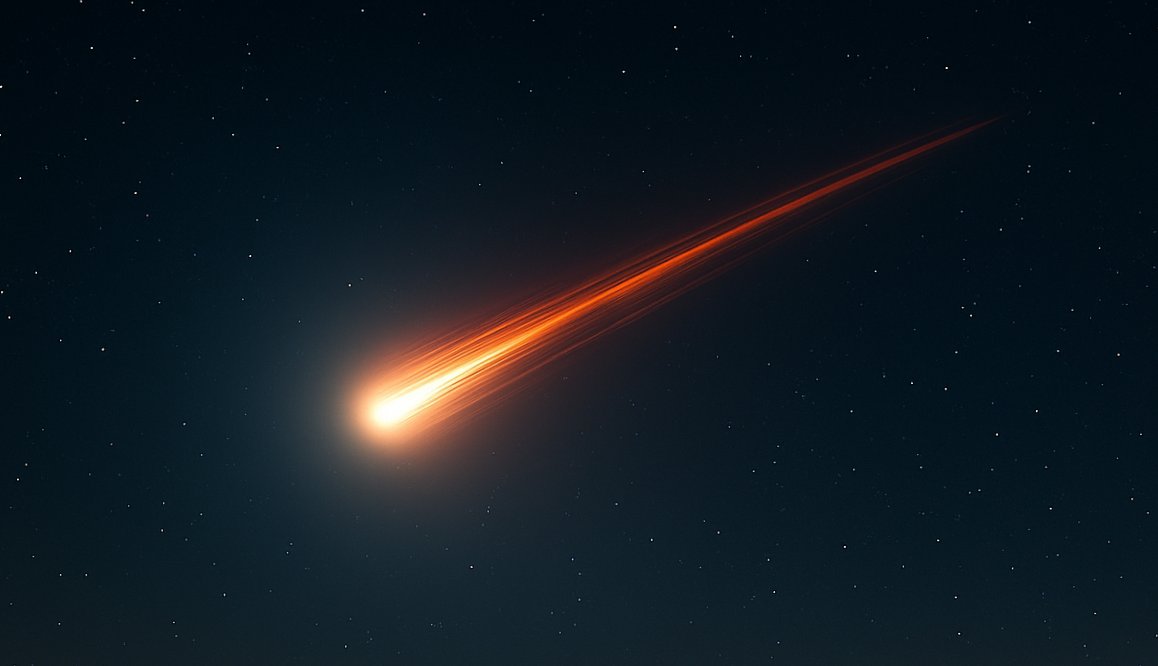
One of the most reliable and dazzling sky shows of the year is unfolding right now, and the timing could hardly be better. The Geminid meteor shower, widely considered the strongest annual meteor display, is peaking tonight through early tomorrow, making this weekend the best opportunity to catch dozens — or even hundreds — of shooting stars.
The Geminids are active every year in mid-December, but their peak typically produces the most frequent and brightest meteors. In 2025, the shower is active from December 4 through December 17, with peak activity expected overnight Saturday into Sunday, December 13–14, according to the American Meteor Society.

What makes the Geminids stand out is both their intensity and their reliability. Under ideal dark-sky conditions, observers can see up to 100 to 150 meteors per hour during the peak. Even in suburban areas with some light pollution, steady rates of bright meteors are common.
This year’s conditions are especially favorable. The Moon will be a waning crescent, rising late in the pre-dawn hours and only about 30 percent illuminated, meaning moonlight will have little impact during the best viewing window. That clears the stage for a darker sky and better contrast, allowing fainter meteors to stand out.
The meteors appear to radiate from the constellation Gemini, near the bright twin stars Castor and Pollux. Gemini rises in the eastern sky during the evening and climbs higher as the night goes on. While a few meteors may be visible earlier, viewing conditions improve significantly after midnight, when the radiant rises high in the sky. The hours between midnight and dawn, especially around 2 a.m. local time, typically offer the highest rates.
You don’t need any special equipment to watch. In fact, binoculars and telescopes aren’t helpful for meteor showers. The best approach is to find a dark location away from city lights, give your eyes about 30 minutes to adjust, and look up at as much open sky as possible. Dress warmly — December nights can be bitter — and bring blankets or a reclining chair to stay comfortable.
The Geminids are best seen from the Northern Hemisphere, particularly across the mid-northern latitudes, where the radiant climbs nearly overhead. Southern Hemisphere observers can still see the shower, but at lower rates and only after midnight.
Unlike many meteor showers, the Geminids are known for producing slow-moving, often colorful meteors, some leaving brief glowing trails. They come from debris shed by an unusual rocky object called 3200 Phaethon, not a traditional icy comet, which helps explain their brightness and consistency.
If skies cooperate, this weekend offers one of the last great astronomical events of the year — a reminder to step outside, look up, and watch the sky come alive.


