

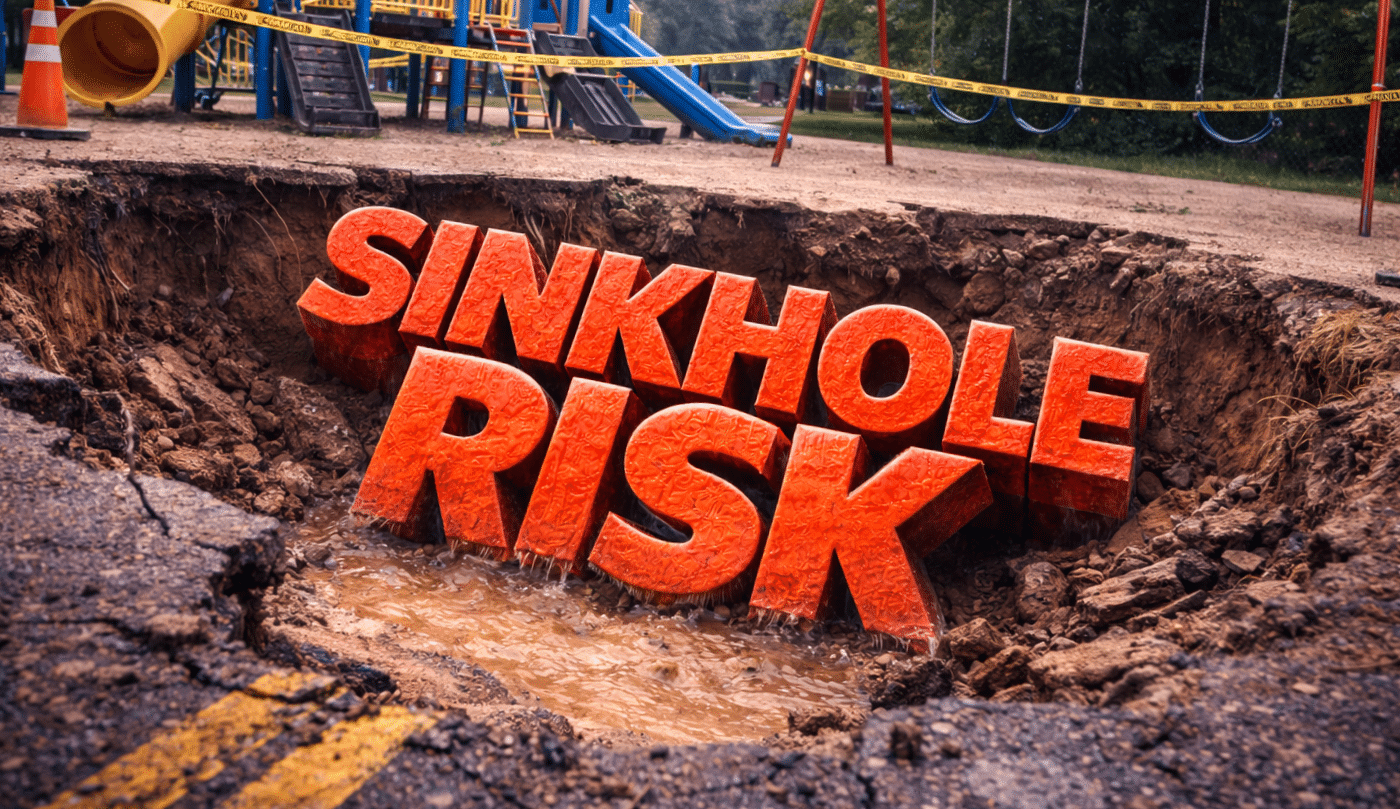
Tampa, Fla. — Florida homeowners face the highest sinkhole risk in the United States, and experts say early warning signs often appear quietly as ground conditions change.
According to the U.S. Geological Survey, Florida’s geology makes it more prone to sinkholes than any other state. Large portions of the state sit atop limestone that dissolves easily when exposed to water, creating underground voids that can weaken the ground above. Changes in groundwater levels — whether from heavy rain, drought recovery, or seasonal shifts — can accelerate the process.

Geologists stress that sinkholes are rarely sudden events. Instead, they typically develop over long periods, with surface changes acting as early indicators. As water moves through soil and rock, it can slowly erode underground support, allowing instability to creep upward toward the surface.
Experts say homeowners often overlook the first signs. Shallow depressions forming in yards, soil that feels soft or spongy, or new areas of standing water may indicate erosion below ground. Cracks in driveways, sidewalks, patios, or foundation walls can also reflect gradual ground movement rather than routine settling.
Other warning signs may seem unrelated at first. Leaning fences, separating steps, tilting trees, or gaps opening between soil and concrete surfaces can signal underground changes that deserve attention.
While Florida carries the highest sinkhole risk nationally, geologists note that similar processes occur in other states with soluble rock formations, including parts of Missouri, Kentucky, Tennessee, and Pennsylvania. Seasonal transitions, when groundwater levels fluctuate, are often when problems become more visible.
The USGS cautions that once surface changes are noticeable, erosion beneath the ground may already be underway. Homeowners are advised not to fill depressions or ignore persistent changes and to seek evaluation from local officials or qualified professionals when warning signs appear.


