

Washington, D.C. – The U.S. Department of Justice briefly removed a set of Epstein-related records from its website on Friday after the documents spread widely online, before restoring the files later the same day, according to archived links and screenshots.
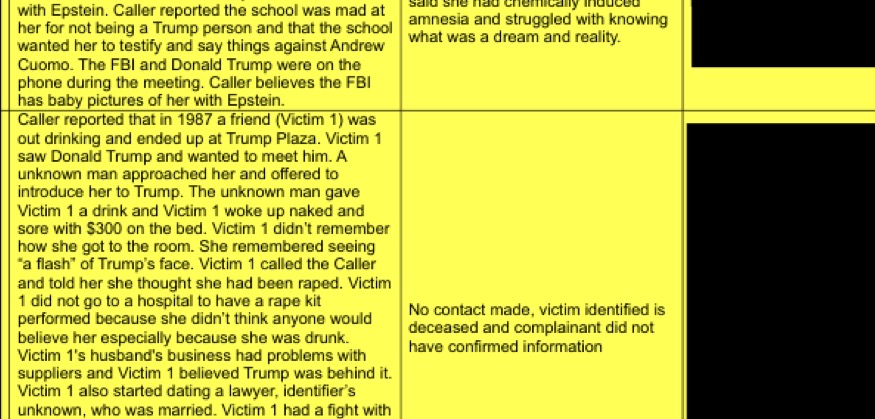
The records appear to include FBI interview summaries, known as FBI 302s, and National Tipline (NTOC) complaint logs documenting allegations made by tipsters and interview subjects connected to Jeffrey Epstein. Several entries contain graphic descriptions of alleged sexual abuse and trafficking, including references to alleged “measurements” of minors. Some allegations explicitly name former President Donald Trump, while others reference additional high-profile individuals.

The documents do not represent findings of fact or criminal conclusions. Instead, they memorialize what individuals told investigators, frequently noting that claims were unverified, second-hand, or internally assessed as lacking credibility. Investigator notes in the records include phrases such as “no probative information,” “no contact made,” or “complainant deemed not credible.”
The temporary removal — followed by the files’ restoration — has intensified scrutiny over transparency and record management at the Justice Department. As of publication, DOJ has not publicly explained why the files were taken down, whether the removal was intentional or procedural, or why they were restored hours later.
Trump has repeatedly denied wrongdoing related to Epstein and has said he severed ties with Epstein years before Epstein’s first criminal prosecution. No criminal charges have been filed against Trump in connection with the allegations summarized in the records.
The episode unfolded amid sustained public attention following Epstein’s 2019 death in federal custody and the conviction of Ghislaine Maxwell on federal sex trafficking charges involving minors — a case that left unresolved questions about powerful figures referenced in investigative materials but never charged.
While the files are now accessible again, the brief takedown has raised fresh questions about how sensitive federal records are handled once they enter the public domain.


