

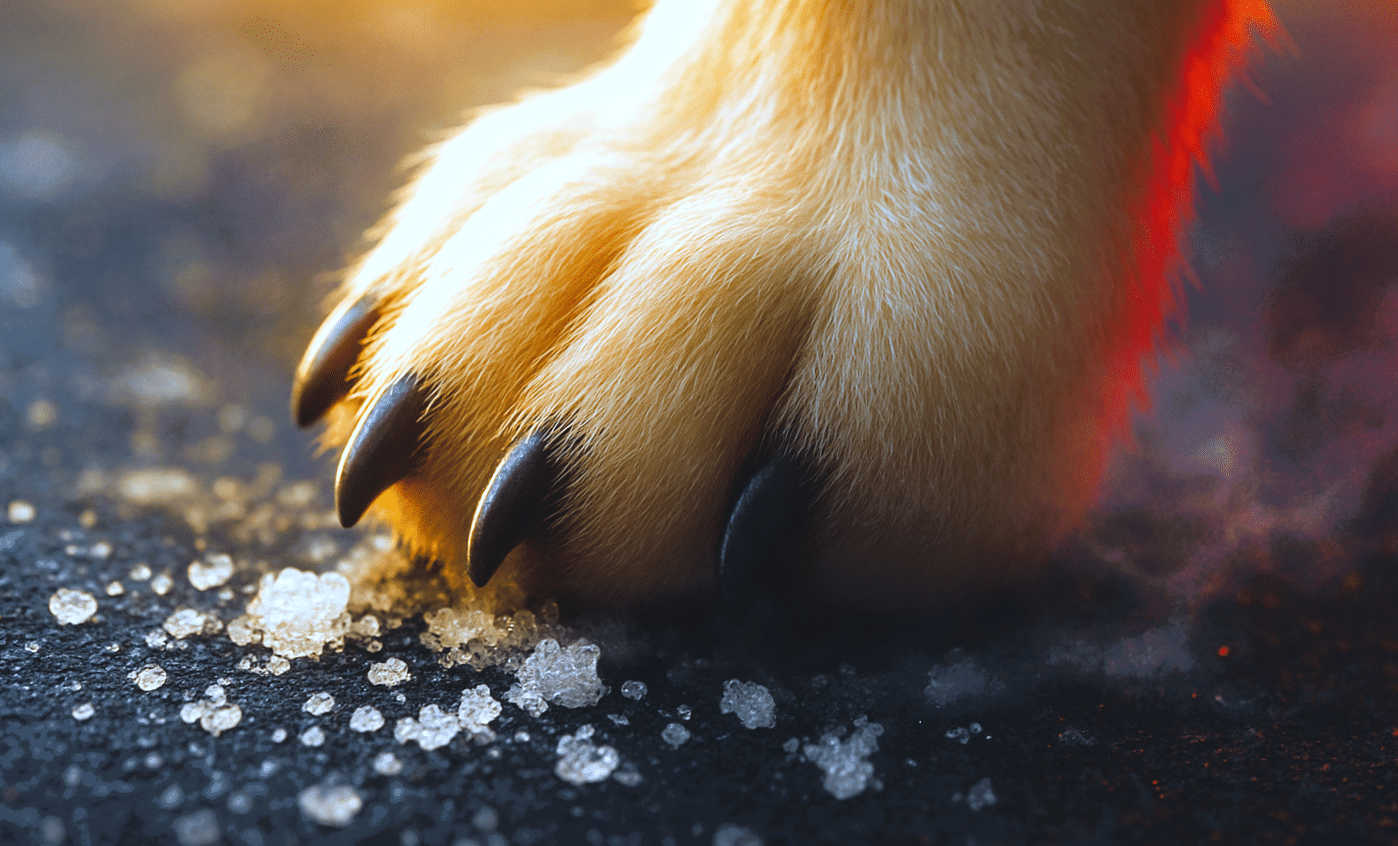
Wilmington, DE – As the first ice and freezing rain of the season approach Delaware, veterinarians are reminding pet owners that winter hazards extend beyond the cold itself. The road salt and de-icers used to keep streets clear can burn paw pads, irritate skin, and cause toxic reactions when pets lick or ingest them.
Most commercial de-icers contain sodium chloride, calcium chloride, or magnesium chloride, chemicals that melt ice efficiently but are harsh on paws. The sharp crystals can lead to cuts, dryness, and cracking. When pets groom themselves after walks, they can swallow salt residue, putting them at risk for vomiting, diarrhea, excessive thirst, or lethargy. In severe cases, overexposure can cause seizures or kidney problems.
Veterinary specialists also warn that some ice melts contain heavy metals or industrial contaminants, which can add to the toxicity risk over time. Even short contact on treated sidewalks or driveways may cause irritation, especially for smaller or short-haired dogs.
To prevent injuries, veterinarians recommend rinsing a dog’s paws with warm water after every walk and drying them completely. A layer of paw balm or wax can create a protective barrier, and trimming fur between the toes helps reduce buildup of salt and ice. Booties can provide added protection for dogs that tolerate them, and pet owners are urged to choose chloride-free, pet-safe ice melt for use around their homes.
With temperatures dipping into the 20s and 30s through early next week, Delaware pet owners are advised to stay alert for limping, licking, or signs of paw pain. Even short walks can lead to irritation or chemical burns if pets are exposed to heavily salted surfaces.
As the first icy conditions of the season arrive, veterinarians emphasize that the biggest winter threat to pets often isn’t the chill in the air—but the chemicals used to fight it.


