

Buffalo, New York – Walkers circling Hoyt Lake in Delaware Park and birdwatchers at Tifft Nature Preserve are being urged to act immediately if they spot a destructive invasive beetle capable of killing hardwood trees across Western New York this spring.
According to the U.S. Forest Service and the New York State Department of Agriculture and Markets, the Asian longhorned beetle attacks maple, birch, willow, poplar and elm trees. Officials warn the insect burrows deep into trunks, cutting off nutrients and weakening trees long before visible dieback appears.

Delaware Park, including areas surrounding Hoyt Lake and the Buffalo Zoo, contains mature maples and other hardwoods that shade trails and parkways. Similar tree cover lines the Niagara River corridor, stretches through Riverside Park and extends into Amherst and Cheektowaga neighborhoods.
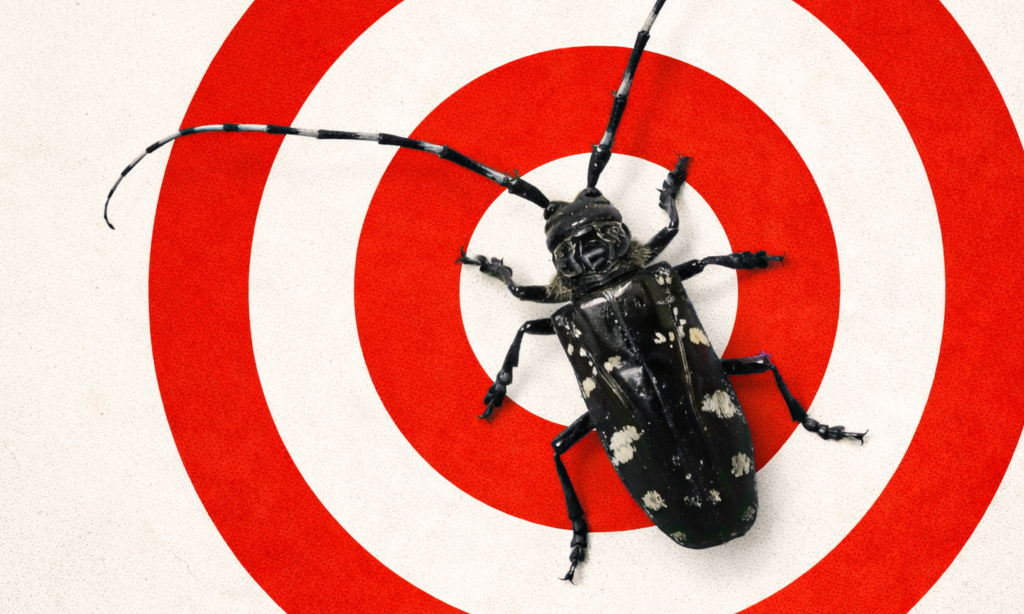
The beetle is glossy black with bright white spots and long black-and-white banded antennae that extend beyond its body. Visitors may notice perfectly round exit holes in trunks or sawdust-like material collecting at the base of trees.
If infestations spread, weakened limbs could snap during strong spring wind events off Lake Erie, creating hazards along park roads and waterfront paths.
Officials urge residents and park visitors to kill the beetle on sight if safely possible and report sightings immediately to state agriculture authorities. Early detection this season could prevent widespread tree removal and protect Buffalo’s urban canopy into summer.


