

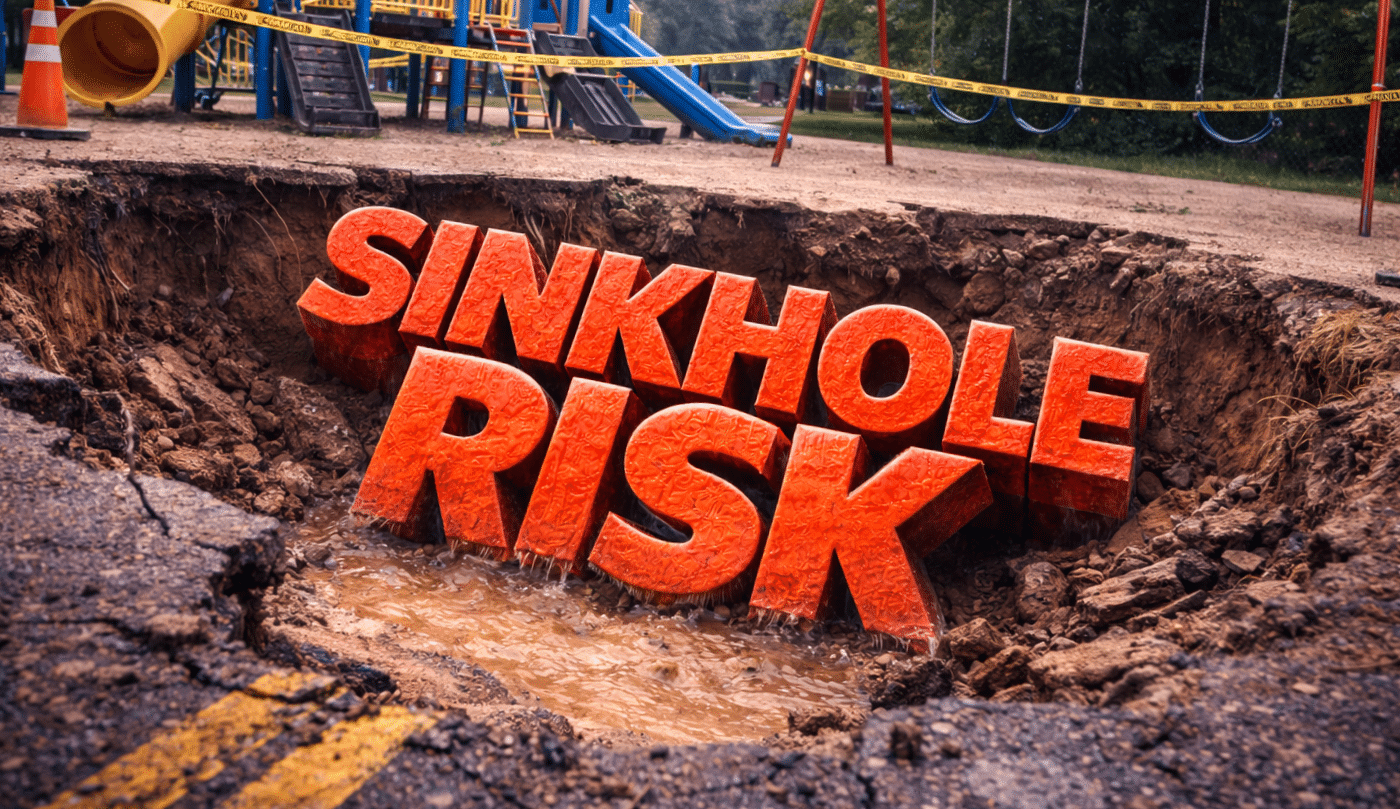
Phoenix, Ariz. — Arizona homeowners face a very low risk of sinkholes, with experts saying true sinkhole formation is rare across most of the state.
According to the U.S. Geological Survey, Arizona lacks the widespread limestone and soluble rock formations that typically drive sinkhole development in higher-risk states. As a result, naturally occurring sinkholes are uncommon and usually limited to very specific geological settings rather than broad regions.

Geologists note that while sinkholes are rare in Arizona, ground-related issues can still occur for other reasons. Localized soil subsidence, ground settling, or collapses tied to aging infrastructure, abandoned mines, or water-related erosion can sometimes be mistaken for sinkholes, even though the underlying cause is different.
True sinkholes, when they do occur, tend to develop gradually. Experts emphasize that surface changes often provide early indicators of underground movement long before a collapse happens, even in very low-risk states.
Homeowners who notice shallow depressions forming, soil that feels unusually soft, or unexpected pooling water are encouraged to document those changes. Cracks appearing in sidewalks, driveways, patios, or foundation walls can also reflect subtle ground movement rather than routine settling, particularly if they worsen over time.
Other signs may be dismissed as normal wear. Leaning fences, separating steps, tilting trees, or gaps opening between soil and concrete surfaces can sometimes point to localized ground instability tied to drainage or subsurface conditions.
In Arizona, most ground changes are highly localized and often linked to water use, soil compaction, or underground infrastructure rather than natural sinkhole processes. Experts stress that risk can vary by neighborhood depending on soil type, development history, and drainage patterns.
The USGS advises homeowners not to fill or cover unexplained depressions if changes persist or worsen, as doing so can hide underlying issues and delay proper evaluation by local officials or qualified professionals.
Experts stress that awareness — not alarm — remains the best approach. Even in states where sinkholes are rare, early attention to subtle ground changes can help prevent property damage and improve safety.


