

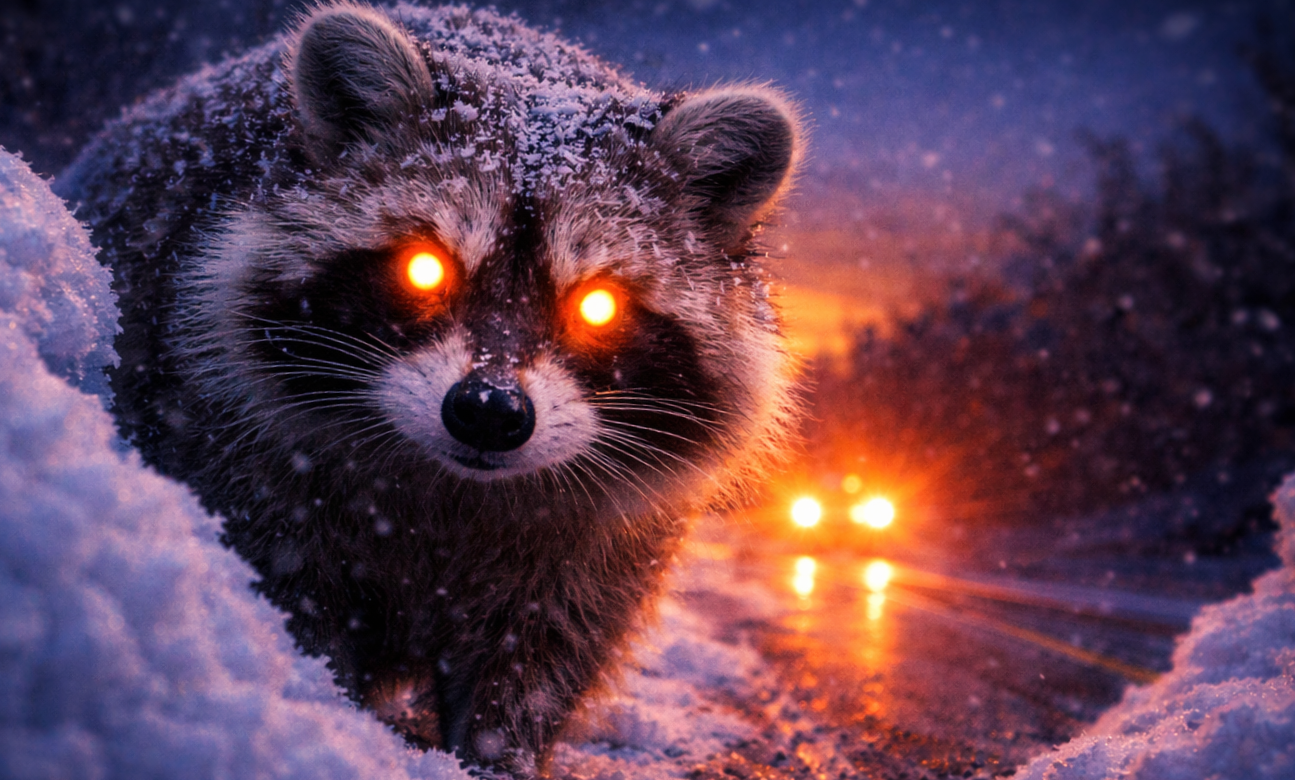
Anchorage, AK – As winter darkness deepens across Alaska and daylight hours shrink dramatically, drivers near Anchorage are being warned about a seasonal danger that spikes sharply this time of year: wildlife collisions after dark.
According to Alaska Department of Fish and Game and transportation officials, winter conditions force animals to significantly alter their movement patterns, bringing them closer to roads and highways—often during evening, overnight, and early morning hours when visibility is at its lowest. With long periods of darkness, many drivers are traveling almost entirely at night during the winter months.
Officials say moose, caribou, deer, and other wildlife are pushed toward roadways as deep snow limits movement and food sources become harder to reach. In south-central Alaska, animals frequently travel along plowed road corridors, river valleys, wooded edges, and suburban areas near Anchorage, placing them directly in vehicle travel paths—often along the Glenn Highway, Seward Highway, Minnesota Drive, and rural connecting roads.
Wildlife biologists warn that moose collisions pose an especially severe risk. Because of the animal’s height, impacts often strike windshields directly, increasing the likelihood of serious injury or death for vehicle occupants. Moose are also dark-colored, large, and difficult to spot until vehicles are dangerously close—especially during snow, fog, or low-light conditions.
The Alaska Department of Transportation urges drivers to reduce speed, use high beams whenever possible, and remain especially alert in areas marked with wildlife crossing signs. Officials caution drivers not to swerve suddenly to avoid animals, as icy roads and reduced traction can lead to rollovers or secondary crashes.
Drivers are also advised to watch roadsides carefully near wooded areas, river corridors, and less-developed stretches outside the Anchorage metro. Wildlife often travels in groups, meaning if one animal crosses the road, others may follow moments later.
As winter continues and darkness dominates daily travel, officials say wildlife-related crashes will remain a serious and ongoing risk across Alaska. Drivers are urged to use extreme caution during evening, overnight, and early morning travel, when animal movement is at its peak.


