

LAS VEGAS — Understanding how Nevada law defines normal wear and tear in rental housing can help landlords and renters avoid disputes and protect themselves.
One of the most common disputes between renters and landlords concerns what counts as normal wear and tear. These disputes are governed by Nevada law under Chapter 118A of the Nevada Revised Statutes. To prevent disputes, the law requires landlords to disclose information, such as existing damage, before signing a lease and receiving payments. The law also requires tenants to provide the landlord with written notice of any needed repairs.

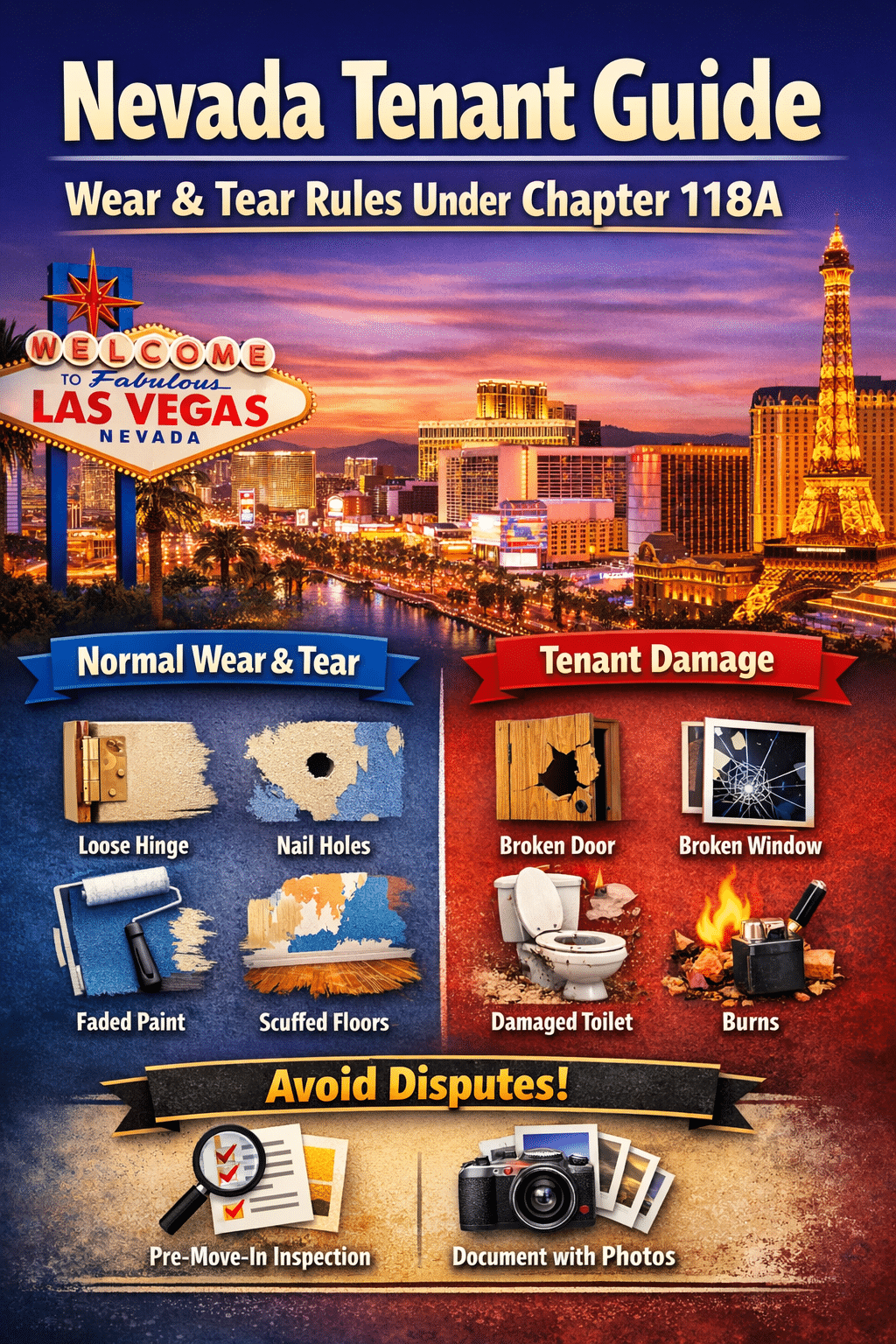
Real estate experts urge renters and landlords to understand the difference between tenant damage and normal wear and tear. Items such as worn or loose door hinges, small nail holes, faded and cracked paint, loose tiles, clogged sinks, scuffed floors, worn countertops, scratches, and stains on old porcelain fixtures are considered wear and tear.
Tenant damage includes holes in doors, broken faucets, broken toilet seats, tears and holes in vinyl flooring, broken mirrors, broken windows, clogged and damaged toilets, neglected landscaping, and burns. This damage will be covered at the tenant’s expense.
Both tenants and landlords can protect themselves by completing a walk-through inspection before the tenant moves in, establishing a baseline for the future. Photos should be taken before and after, to avoid disputes.


