

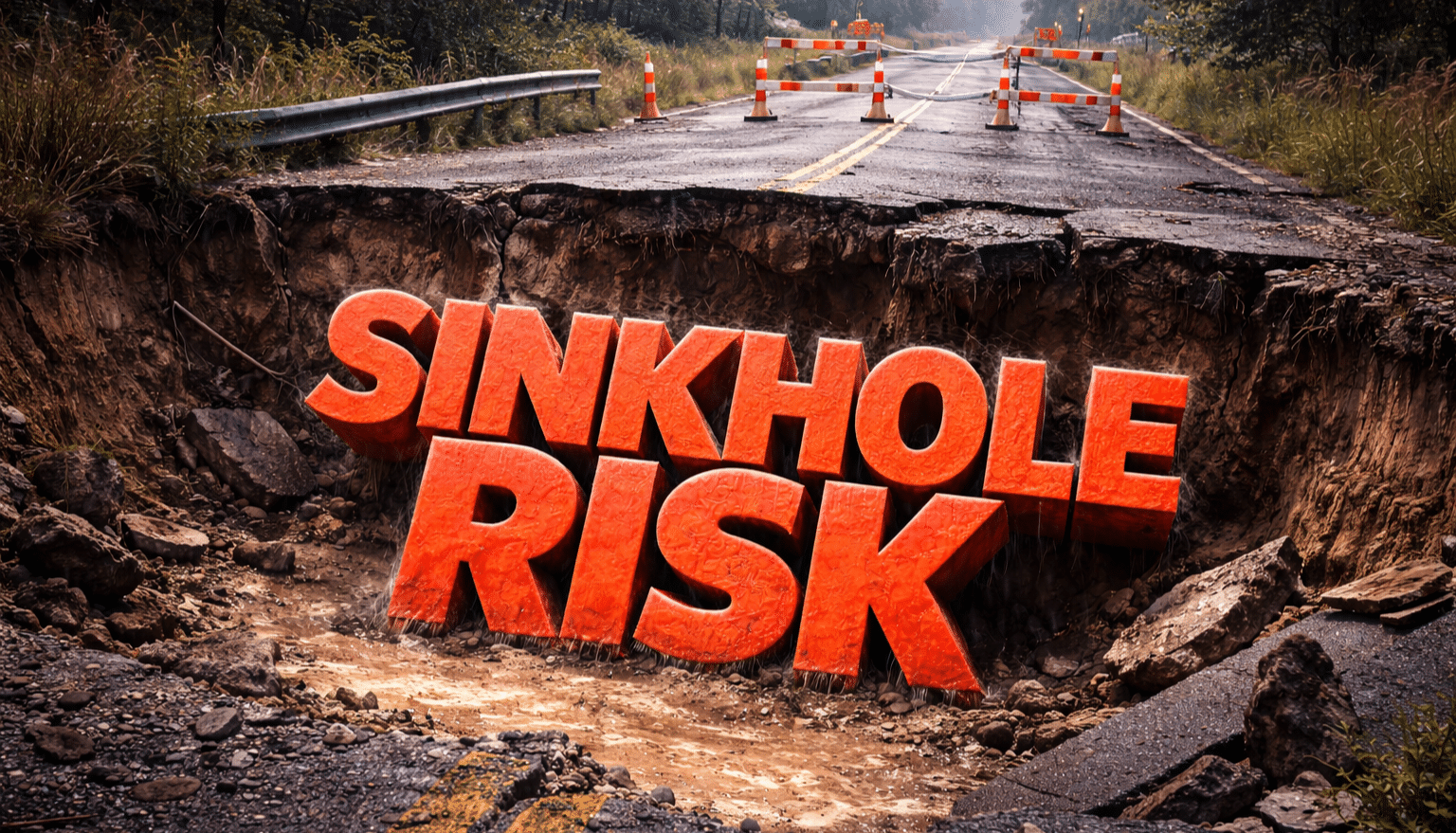
Trenton, N.J. — New Jersey homeowners face a generally low risk of sinkholes compared with many other parts of the country, but experts say subtle ground changes should still be taken seriously when they appear.
According to the U.S. Geological Survey, most of New Jersey does not sit atop widespread limestone or other highly soluble rock formations commonly associated with sinkhole development. As a result, large-scale sinkhole activity is uncommon statewide.

Geologists note, however, that low risk does not mean no risk. Isolated sinkholes can still occur, particularly in areas with localized limestone deposits, abandoned underground structures, or where groundwater conditions are altered by heavy rainfall, construction, or aging drainage and sewer systems.
Sinkholes typically develop gradually, even in low-risk regions. Experts emphasize that surface changes often provide early indicators of underground erosion or soil movement well before a collapse occurs.
Homeowners who notice shallow depressions forming in yards, soil that feels soft or spongy underfoot, or unexpected areas of standing water are encouraged to document those changes. Cracks appearing in sidewalks, driveways, patios, or foundation walls can also reflect subtle ground movement rather than routine settling.
Other warning signs are easy to dismiss. Leaning fences, separating steps, tilting trees, or small gaps opening between soil and concrete surfaces may sometimes point to localized ground instability rather than normal wear and tear.
In New Jersey, sinkhole-related concerns are more likely to be highly localized rather than widespread. Experts say risk can vary by neighborhood depending on soil composition, drainage patterns, infrastructure age, and past land use.
The USGS cautions that when surface changes persist or worsen, homeowners should avoid filling depressions or covering affected areas. Doing so can mask developing issues and delay proper evaluation by local officials or qualified professionals.
Experts stress that awareness — not alarm — remains the best approach. Even in low-risk states, early attention to subtle ground changes can help prevent property damage and improve safety.


