

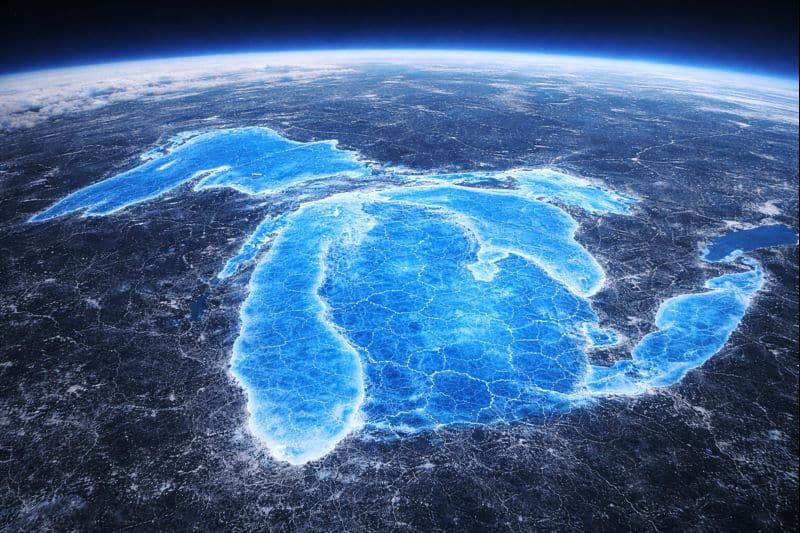
Chicago, Illinois – Residents across the Midwest and Great Lakes region are seeing a rare and impactful winter development as ice coverage on the Great Lakes surges to levels above what is typical for late January.
According to NOAA, 43.3 percent of the Great Lakes are now covered in ice, already exceeding the historical average for this point in the season. The rapid freeze follows several days of arctic cold combined with light winds, conditions that allow ice to expand quickly and persist.

For residents, this shift has real-world consequences. One of the most noticeable impacts will be on lake-effect snow. With less open water available, communities downwind of the lakes—including areas near I-90 in northern Indiana and Ohio, I-94 in Wisconsin, and I-75 near Detroit—may see fewer intense lake-effect snow events. While that can mean fewer whiteout conditions, it also signals a colder, more locked-in winter pattern.
The expanded ice can also affect travel and safety. Ice movement along shorelines can damage docks, restrict marina access, and create hazardous conditions for anyone venturing onto frozen areas. Officials warn that ice thickness is uneven and can change rapidly, making travel on frozen lakes dangerous.
Shipping interests on the Great Lakes may face increasing challenges as ice coverage expands, while coastal communities could see ice jams shift with wind changes. For everyday residents, colder near-lake temperatures may persist longer into late winter due to reduced heat release from the lakes.
NOAA scientists note that while ice coverage can fluctuate, the current trajectory places this season among the more significant mid-winter icing events of recent years. Additional cold outbreaks could push ice coverage even higher in February.
Residents are encouraged to stay informed through official forecasts and ice analyses, especially those who live, work, or travel near the Great Lakes.


