

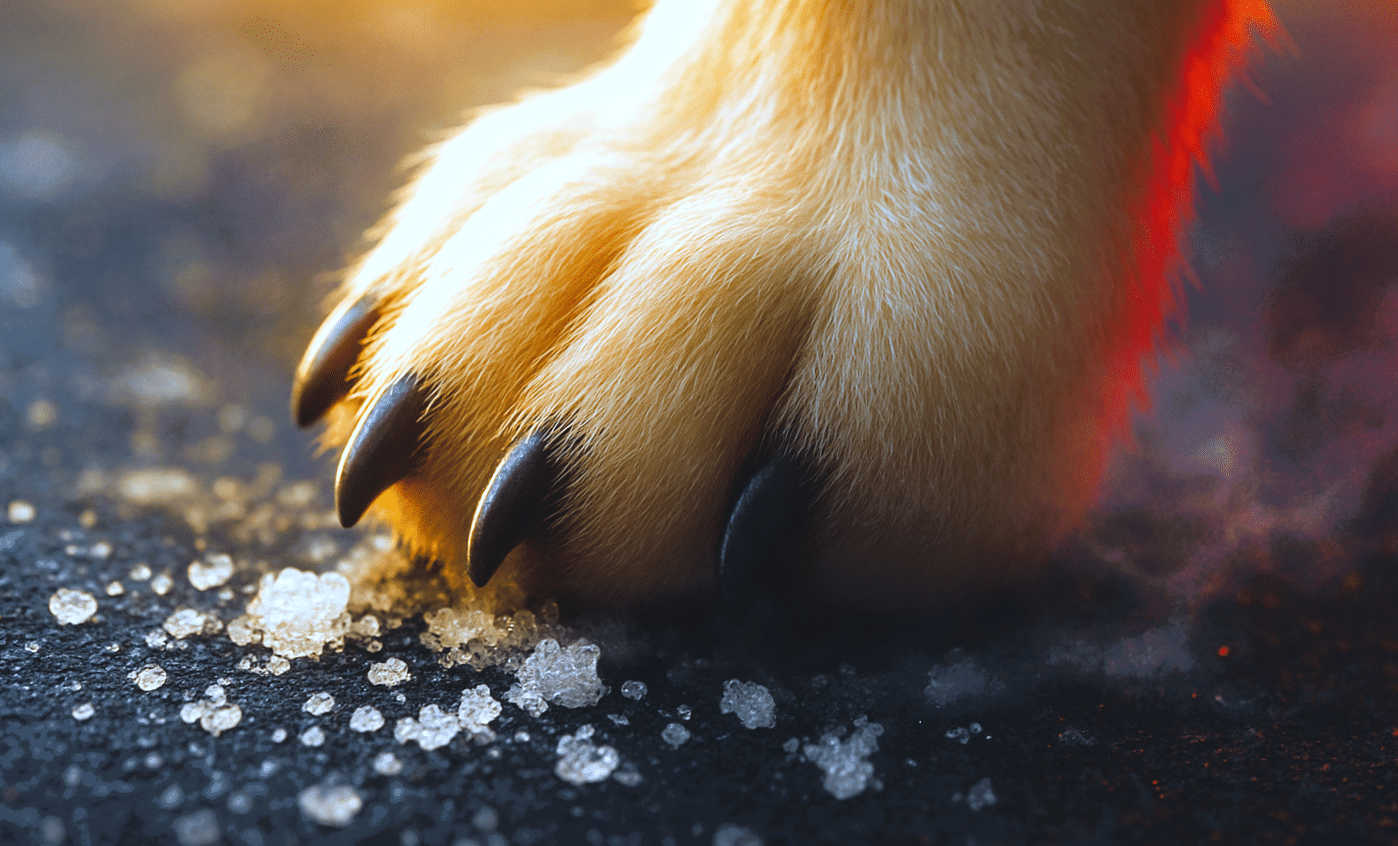
Dallas, TX – As first frost and hard freeze warnings stretch across much of Texas this weekend, veterinarians are urging pet owners to take precautions during early-morning walks. While the state is more familiar with heat than cold, the road salt and de-icers used during freezing conditions can still burn paw pads, irritate skin, and cause toxic reactions if pets lick or ingest them.
Common ice-melt products contain sodium chloride, calcium chloride, or magnesium chloride—chemicals designed to melt frost and ice but harsh on paws. Even limited use on bridges, parking lots, or sidewalks can cause cracking, redness, or burns. When dogs lick their feet afterward, they risk ingesting these chemicals, which can lead to vomiting, diarrhea, excessive thirst, or lethargy. Severe cases of salt poisoning may cause seizures or kidney failure if not treated promptly.
Veterinary experts note that southern pets are often more vulnerable because owners may not realize road treatments are being applied during short cold spells. Some de-icers also contain industrial additives or heavy metals, which can make them even more toxic when ingested.
To help prevent injury, veterinarians recommend rinsing a dog’s paws with warm water after every walk and drying them thoroughly. Applying a paw balm or wax before heading outdoors can help protect the pads, while trimming fur between toes prevents salt and frost buildup. Booties can provide an extra layer of safety for dogs that tolerate them. Homeowners are encouraged to use chloride-free, pet-safe ice melts on driveways and entryways.
With overnight lows expected in the 20s and 30s across the Panhandle, North Texas, and parts of Central Texas, road crews are already preparing bridges and overpasses for possible icing. Veterinarians warn that even small traces of salt can cause irritation for pets walking in these areas.
As frost and freezing temperatures settle across the Lone Star State, experts remind pet owners that winter’s biggest threat to dogs may not come from the cold—but from the chemicals on the ground beneath their paws.


