

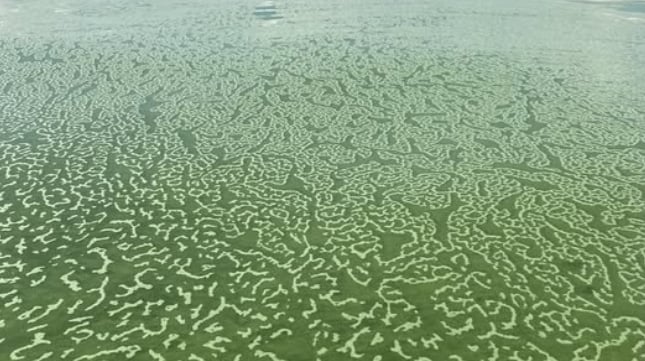
Ann Arbor, MI – New research from the University of Michigan suggests harmful algal blooms in Lake Erie may contain a far wider range of potentially toxic compounds than scientists previously recognized, raising new questions about water quality monitoring and public health.
According to a University of Michigan study published May 27, researchers found that western Lake Erie produces a rotating mix of bioactive compounds known as cyanopeptides. These compounds can overlap and interact with one another throughout the algae bloom season, potentially influencing overall toxicity.

Researchers analyzed samples collected monthly from May through October between 2016 and 2022 at NOAA monitoring stations in western Lake Erie. By examining microbial DNA and associated compounds, scientists were able to identify which cyanobacteria were producing specific substances.
The study found not only the commonly monitored toxin microcystin, but also several other compounds that have received less attention in traditional monitoring programs.
“A lot of people are aware of these algal toxins, but the big picture is that these harmful algal blooms are expanding with climate change, and they’re a real threat to recreation, drinking water and ecosystems,” senior author Gregory Dick, a University of Michigan professor, said in a statement.
Researchers described the seasonal progression of blooms as occurring in multiple phases. While microcystin dominates early in the season, other compounds become more prominent later as environmental conditions change.
A companion study examined how some of these compounds interact. Researchers found certain combinations could amplify toxic effects in laboratory tests using human cell lines. However, scientists cautioned that laboratory findings do not necessarily translate directly to real-world human or animal health outcomes.
The researchers say the findings highlight the need for broader monitoring efforts across Lake Erie and other large lakes, particularly as harmful algal blooms continue to be influenced by nutrient runoff and changing climate conditions.
